Joshua 21:45
“Not a word failed of any good thing which the Lord had spoken to the house of Israel. All came to pass.”
 A lot of my childhood was spent on the ocean. From as far back as I can remember, my dad had a boat and we would spend the summers taking vacations to Catalina Island. It was a great way to grow up. We would spend day after day on the boat, fishing, swimming, diving and exploring. When the vacation finally came to an end and we made the 27 mile journey back to the mainland, I experienced an interesting sensation. After so much time rocking back and forth on the boat, the ground seemed especially solid.
Life can seem like a journey at sea. We seem to get hit by unexpected waves, and the ground we are standing on is moving. If we are going to get through turbulent times, we need to have some solid ground to stand on.
After a lifetime of following the Lord through some very turbulent waters, Joshua confidently exclaimed that not a single promise of God had ever failed him. No matter what the obstacle, Joshua had learned by experience, the promises of God are like a solid rock upon which he could stand.
I have found, for every experience of life, there is a promise to cling to. When facing the challenges of life, it is vital that the child of God look into the Word, find the appropriate promises, and then hide in them, like a bunker from the storms of life.
Some of the promises which have been particularly encouraging to me include:
2 Timothy 1:7
“For God has not given us a spirit of fear, but of power and of love and of a sound mind.”
Philippians 4:7
“. . . and the peace of God, which surpasses all understanding, will guard your hearts and minds through Christ Jesus.”
Hebrews 13:5
“Let your conduct be without covetousness; be content with such things as you have. For He Himself has said, ‘I will never leave you nor forsake you.’”
Isaiah 54:17
“‘No weapon formed against you shall prosper,
And every tongue which rises against you in judgment you shall condemn. This is the heritage of the servants of the Lord, and their righteousness is from Me’, says the Lord.”
Jeremiah 29:11
“For I know the thoughts that I think toward you, says the Lord, thoughts of peace and not of evil, to give you a future and a hope.”
2 Corinthians 3:5-6
“Not that we are sufficient of ourselves to think of anything as being from ourselves, but our sufficiency is from God, who also made us sufficient as ministers of the new covenant, not of the letter but of the Spirit; for the letter kills, but the Spirit gives life.”
In response to this blog a good friend sent me the following note.
“When I was diagnosed with an illness, a close friend gave me a list of “promise” verses. Honestly, at the time, I read through them and tucked them away, but that was about it. In the last 3 years, I can’t tell you how many times I pulled out that list and allowed the Word of God to comfort, strengthen and encourage me.
To your list I would add Isaiah 41:10, Psalm 61:1-4, Psalm 55:22 and so many more.”
Praying His Word will be like a safe harbor, and like solid ground, in the midst of the storms of life.
Pastor Jim
 We read, they spoke in a way that resulted in many believing in Christ; which in turn, results in eternal life. It is worth noting that there is a way to speak which will have an impact upon others for eternity. Their speaking included at least three things:
 Many of the cities throughout Israel were designated as “Cities of Refuge.” This meant, if a person accidentally caused the death of another, he could flee to one of these cites for protection from the revenge of the victim’s devastated family. The rules governing these cities were simple. If death was caused accidentally, the guilty could flee to the city, and remain safe within its borders, until the death of the reigning High Priest. After his death, the crime was completely forgiven and the individual was free to return to his normal life. This law was designed to curb vengeance, but also serves as a picture for us of the work of Christ.
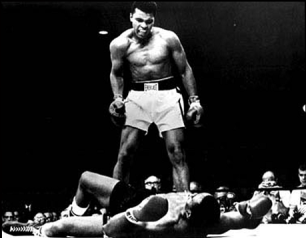 The tribe of Manasseh felt as though they had been ripped off when the land was distributed. They looked at their inheritance with disdain because it seemed small, and they considered themselves a great people worthy of so much more. Joshua explained to them that the land was theirs for the taking and their greatness would be proven as they overcame the obstacles that stood before them. It seems pretty clear, Joshua and Manasseh had very different views as to what greatness really meant.
  This is one of the most important events in history. It marks the beginning of the missionary campaign to the church in Antioch. The results of this event brought the Gospel throughout the Roman Empire, and changed the face of Western Civilization. History would forever be changed as a result of these two men responding to the call of God. A few things strike me about God’s call.
 After the great deliverance from Egypt, forty years in the wilderness, and five years in the Promised Land, there were still tribes who were neglecting to possess their possessions. In other words, the land that had been promised and distributed to them, remained in the hand of their enemies. Joshua, in a form of harsh rebuke, declares that the reason for their failure to take the land was simple neglect. Perhaps some used the age old excuse of “I have just been so busy” or “I don’t have time right now.” We know for sure, some of them made the excuse of the task being too difficult.
 Things looked very bleak for Peter. Persecution was on the rise throughout Israel. Many of his friends had been forced to flee to other nations for their safety and survival. James, perhaps his closest friend, had been killed by Herod, as a way to increase his political status. Now Peter found himself arrested and awaiting what was sure to be a mock trial and certain execution. He had watched this scene develop once before. We read that these events transpired during the Feast of Unleavened Bread which followed Passover. It was during this time of year Peter had watched his Savior arrested, condemned and crucified. If ever there was a desperate hour in the life of Peter, it was now. Until we read,
 Both Joshua and the early chapters of Judges, tell the story of Israel’s occupation of the land of Canaan. After the initial strikes led by Joshua, the land was divided into twelve lots. Each tribe was given the responsibility of possessing their territory. While we read of some great victories that illustrate dynamic faith, we also read a reoccurring theme where the tribes either did not, or could not, drive out one people group or another. Sometimes it was a failure on the part of the people to trust God and step out in faith, other times it was due to convenience. In the case of Benjamin, they allowed the enemy to remain within their borders because they believed they would personally benefit from keeping them around.
  After Joshua led the armies of Israel in victory against the Canaanite kings, he distributed the land to each of the tribes. The lands were determined by lot and the size of each tribe. The lot was like a divinely inspired roll of the dice. They may have prayed, rolled the dice, and trusted the Lord for the outcome. Once the lands were distributed, each tribe was responsible to occupy their portion. In order to occupy the land, they had to settle into what they had previously conquered, then daily, deal with those inhabitants who stubbornly remained.
 There are many churches I would love to visit and observe the work God is doing. The church in Jerusalem was one of those churches. In the early chapters of Acts, we read about this church that began as a work of the Spirit, was birthed in revival, emphasized outreach, focused on discipleship, and even sent out saints to impact the world. We read that they gathered at Solomon’s Porch (an area adjacent to the Temple), to worship, pray, and preach. No building in the city was large enough to house the multitudes who were coming to Christ, so the believers met together in homes throughout the city for prayer, study, fellowship and communion. What a thrilling time it must have been to be a part of that work of God. Sadly, by the end of the book of Acts, the church in Jerusalem had changed. No longer was it the hub for ministry that it once was. Instead, it had become a place filled with internal conflict brought about by legalism. The seed of that is found here.
 Jim Gallagher