Jonah 2:1
“Then Jonah prayed to the Lord his God from the fish’s belly.”
 Although very few people have ever been swallowed by a great fish, the story of Jonah is still a pretty common one. It tells of a man who refused to do what God called him to until the chastening of the Lord got his attention. It is remarkable how long Jonah endured this chastening before he called on God and amended his ways. I have often wondered at what point along the way I would have obeyed. He had his first opportunity when he heard the word of God, his second, when the storm hit, and his third when the sailors awoke him, cast lots, and determined the storm was his fault. His fourth opportunity came when the sailors, who had been idol worshippers, turned their lives over the the Lord. His fifth chance came when he was cast into the sea, and his sixth, when a great fish opened its mouth and swallowed him whole. This is where the stubbornness of Jonah really stands out. He tells us, with his body wrapped in seaweed and stuck in what seemed like his eternal grave, that it took three days before he cried out to God and repented of his disobedience.
As wild as this story is, Jonah is not alone in it. The stubbornness of the human heart is almost beyond comprehension. I have watched families be dismantled over the sins of a father, who will not let go of an ungodly act or relationship. With his wife and children pleading with him to come back to them, he continues in his rebellion until everything he has worked years to erect, comes tumbling down around him.
The question we have to ask ourselves is, “At what point will you repent?” How much farther do you need to walk away from the Lord before you will turn to Him and cry out for His help? Don’t wait until the seaweed is around your head or the stomach juices have bleached your skin. Turn to Jesus now, and let His mercy wash over you, and let His power restore what you have broken.
Pastor Jim
 Sadly, the people of God had once again wandered from their God. The allure of idolatry, with its lack of morality, had seduced the people. They were now distant from God and beginning to suffer the consequences of a life lived apart from Him. Once again, the mercy of God is revealed as Joel encourages the people to turn back to YHWH and be restored. He explains the way back and the results.

 Isaiah lived during interesting times. The northern nation of Israel was about to fall prey to Assyrian forces, while the southern nation of Judah was facing the threat of annihilation. Instead of turning from immorality and seeking God, the people were determined to continue in their wickedness. A great campaign was underway to fortify the cities to withstand enemy forces. They built reservoirs to hold water, stored up grain supplies, and made pacts with other nations in order to withstand the onslaught of the enemy. In all their efforts to prepare for battle, they forgot the most important step, they failed to turn to the Lord.
 Unfortunately, sadness is a common feeling. We have experienced it in all its varying levels and intervals. We have had little things happen that caused us to frown and go quiet, and we have had deeper experiences that gripped us with sorrow and caused us to weep or even wail. Paul is speaking here, not of the sorrow that comes from your favorite team losing a game, or even losing someone you love, he is speaking of the sorrow that comes upon a person when they realize they have sinned against God. The Psalmist wrote of a time when he was overcome with that kind of sadness;
 Hands down, Manasseh was the worse king to ever reign in Judah. In a few short years, he undid all the reforms his father had effected, and seduced the people into sins they had never dreamed of committing. The spiritual climate in the nation was at an all time low, and the morality of the people followed suit. It is not surprising to read the Assyrians defeated Judah, and carried the king off captive to Babylon. What is surprising to read is, during his affliction, he not only cried out to God for help, but he truly committed his life to the Lord. This turn around forever changed life and eternity for Manasseh. Through his downfall, he came to realize the Lord was God, and he began to make great reforms within his life and the nation. Altars, which had previously led him into sin, were removed. Repairs were made to the Temple of God; making worship and sacrifice easier and more appealing.
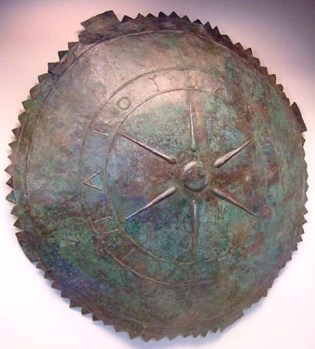 Rehoboam is known for being the king that split the nation of Israel. His greed drove him to make decisions that ultimately divided the kingdom. Sadly however, this was not the worst policy he implemented. During his seventeen year reign, he continued to ignore the Word of God and to introduce idolatry to the nation. As a result, this once powerful nation fell prey to their enemies. Like a shark smelling blood in the water, Egypt saw the weakness of Israel and sent troops to Jerusalem. Their armies easily overcame any and all resistance and began to loot the city. Just a few short decades after the Temple was completed, it was ransacked by foreigners and its prize articles were stolen. Among the items Shishak took, were the golden shields that hung as a symbol of Israel’s strength. Rather than turning to God, Rehoboam decided to hang bronze shields in their place. After all, from a distance, who would really be able to tell the difference. What a different story this would have been if Rehoboam would have fallen on his knees and turned back to the Lord.
 Jim Gallagher