Esther 6:1
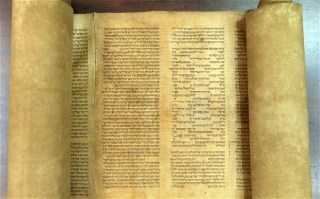
“That night the king could not sleep. So one was commanded to bring the book of the records of the chronicles; and they were read before the king.”
 We don’t always get to see what God is doing on the other side of our trials. This is one of those rare cases and should provide us with a great deal of comfort. Esther had been encouraged by her uncle to use her position as Queen to make a request on behalf of the Jewish people who were being targeted for extermination. She knew this was a dangerous move since it would require her accessing the king without permission as well as exposing that she too was Jewish. None the less she boldly requested the king and Haman to attend a banquet where she would expose Haman as a fiend and plead for the salvation of her people. What Esther did not know is that God was working behind the scenes in an extraordinary way.
That night the king was unable to sleep and decided to review the official book of records. It seems that even then the cure for insomnia was a good old fashion history text book. While examining these records he came across a section that described a murderous plot against the king that had been thwarted by a Jewish man named Mordecai, yet there was no record of him being rewarded for his service. The very man who wanted to destroy the Jews found himself having to honor one of the Jews.
When Esther arrives at the banquet to make request on behalf of her people the Lord has already prepared the heart of the king. The same thing is true in our lives. The Lord is faithfully working behind the scenes to prepare the way for what He has called us to accomplish.
Jim

 I spent much of my life in California before moving to Florida. The people I first met in Florida would often tell me they could never live in California because of the earthquakes, when I visited California people would say they could never live in Florida because of the Hurricanes. If you live in the Midwest it is the tornado that people fear and if your in the north east it is the cold. The reality is everywhere in the world has its challenges and things that make life difficult.
 Israel was in a bad place. Conservative estimates calculate the camp of Israel to be nearly 2 million souls. They had left the comfort of the Nile river and began the arduous journey through the desert en route to the land of Promise. It did not take long before the difficulty of their journey began to take its toll physically and emotionally. The hardship of their experience coupled with the lack of basic provisions caused them to doubt the power of God to carry them safely to their destination. When their water supply ran out it is understandable that their faith was challenged and their weaknesses revealed. Their hardship would provide another opportunity for God to reveal His loving kindness. The characters in the scene include the congregation of Israel, an arid desert, a solid rock and a stick in the hand of Moses. What looked to be an impossible situation turned out to be a means for God to reveal Himself to the nation.
 We can never be sure what the day in front of us holds. We can each testify of times in life, where our days were suddenly interrupted with something good or something bad. A phone call, text, email, or visit to the doctor, can suddenly change the course of our day and even our lives. David exhorts us that regardless of what life throws our way, we should always respond by magnifying the Lord.
 Sometimes knowing the setting in which a psalm was written is beneficial to understanding its content. Other times, like in this psalm, the setting is not given because the truth is universal. Whatever our condition, whether we would classify it as good or bad, blessing or trial, God remains the same and is always worthy of the highest praise. The truths tucked away in this psalm transcend every experience the child of God endures. Whatever state you are currently facing, it is a good idea to clap your hands and shout out the loudest praise.
 We cannot be certain of the situation that caused this psalm, but it is very clear the Psalmist was going through an extremely difficult season in life. He describes himself as being under severe attack and needing the Lord to be his fortress. He speaks of his troubles and his adversities, and his eyes wasting away in grief, as he cries before the Lord. He also goes into great length to speak of his emotional condition during this time. He describes himself as, “wasting away with grief, in both his soul and body” and being “like a broken vessel.”
  Like most of us, much of my childhood was spent in school, and one of the worst words for any student to hear is “test.” For some of us, this word still conjures up feelings of fear, defeat and humiliation. As a student, I was never quite sure why we had to take so many tests. Years later, and much to my own surprise, I actually became a teacher and had a totally different view of the purpose of all those tests. They were not to make the children suffer as much as they were to show, student and teacher alike, what they already knew and what we needed to work on. The tests God put Israel through had a similar purpose. He allowed them to walk through some difficulties to show them what was in them and what work He still needed to do.
 It is not uncommon today, to hear messages in the church making it sound as though walking with Jesus will mean we will no longer face difficulty, and our life will be filled with increase. This teaching is referred to as “prosperity doctrine”, and while catchy, it is clearly not Biblical. The saints of old did not expect to walk through life without trial, difficulty or opposition. Instead, they expected that in he midst of whatever life threw at them, they would find help, comfort, consolation and strength from the Lord. Perhaps no one more clearly expresses this than the prophet, Habakuk. He paints the darkest picture a farmer could ever imagine and declares, in spite of it all, he would continue to rejoice in the God of his salvation.
 Jim Gallagher