Deuteronomy 2:37
“Only you did not go near the land of the people of Ammon—anywhere along the River Jabbok, or to the cities of the mountains, or wherever the Lord our God had forbidden us.”
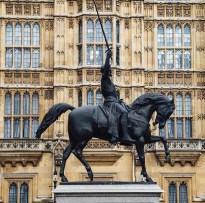 Israel’s journey through the wilderness serves as a vivid illustration of the believers walk with God. Here we find that God led them away from some battles and into others. This reminds me of the words of Jesus in the Lord’s Prayer (Matthew 6:13),
“And do not lead us into temptation, but deliver us from evil. For Yours is the kingdom and the power and the glory forever.”
As we walk with the Lord, we find that He leads us away from many temptations. We will also find that more of our time is spent around the people of God and involved in the things of God. However, there are times when He will lead us directly into battle. We will be forced to face struggles head on and learn to rely upon the Word of God, and the Spirit of God, for victory.
Years ago, Newsweek magazine released a publication called “The Conquerers”, which gave a synopsis of the great military leaders throughout history. Each of these leaders had one thing in common, they introduced a new form of combat that their enemies had never seen. A careful observation of Israel’s victories will reveal the exact opposite. They did not defeat their enemies because they were stronger, smarter, or larger, but because they obeyed the Lord and relied upon His Spirit.
When we come face to face with temptation, obstacle, or difficulty, we need to understand that the same God who leads us away from temptation, will sometimes lead us into battle. When those times arise, we must always lean on the Word for direction and the Spirit for strength.
Pastor Jim

 Zerubbabel, the governor of Judea, was responsible for a task far too great for himself. He had led a small group of untrained refugees from Persia back to Jerusalem. There, in the midst of continual opposition, and with limited resources, they began the project of restoring the Temple of God. It did not take long for the people to become discouraged and the work to cease. It was then, that a message came to Zechariah from the Lord. The message was in the form of a vision, and showed the Temple menorah connected to an olive tree by seven golden pipes. These pipes provided oil to the lamp, without the need of human intervention. Puzzled by the meaning of the vision, Zechariah was told this was a message for the governor. Just as the lamp would be fueled supernaturally, so would Zerubbabel be strengthen by the hand of God. He was told that it was ‘Not by might nor by power, but by My Spirit,’ says the Lord.
 There are times in Scripture when God will resort to name calling, not as a way to be mean, but as a means of illustrating the behavior of His people. There is that famous passage in Matthew 16 where Jesus calls Peter, Satan. He does this because like the devil, Peter was attempting to stand between Jesus and the cross. Whenever a person obstructs the work of the cross, they are supporting the work of the devil. Here, God uses a different analogy. It may not be quite as striking as referring to a disciple as the devil, but it paints a very clear picture of how God viewed the nation of Israel. He saw them as a silly bird, without any sense. A parallel illustration could have been to compare them to a squirrel, who seems to run around without any real clue of what it is doing.
 The Bible is the most popular book of all time. It has been translated into almost three thousand languages, and has been distributed on every continent. In America, almost every household contains a Bible, and in many cases, they own more than one. Some Christians seem to be collectors of Bibles. Their bookshelves contain multiple translations of the Bible, and with the advent of smart devices, we can have a cornucopia of translations at our fingertips. All that being said, there seems to be a common problem around the world; people do not read the Bible. John’s encounter with this angelic being gives some beautiful insights into what we should do with our Bibles, and what our Bibles will do to us.
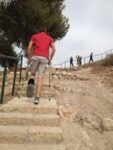


 It seems as though men have always been fascinated with strength. We have all seen images of Greek or Roman statutes, they look like they have come off the pages of a body building magazine, making us wonder if every Roman official looked like the Incredible Hulk. We have also seen images of rockets blasting off, volcanos erupting, or a nuclear explosion. The sheer force involved in these phenomena is mesmerizing. Psychologists and business gurus encourage us to recognize our strengths in order to find happiness in life or success in business. It is not difficult to find lists of character strengths by which to measure ourselves. However, it has been my observation, the things Paul tells us to be strong in are strangely absent. While it is important to be strong in things like decision-making, seeing a task through to the end, or being creative, Paul exhorts us to be strong in other areas which have far more eternal value.
 Jim Gallagher