Revelation 6:16
“Fall on us and hide us from the face of Him who sits on the throne and from the wrath of the Lamb!”
 Chapters 6-19 in the book of Revelation, describe the period known as the Tribulation. According to Daniel the prophet, it is a seven year period when the judgment of God is meted out upon the earth. The fact that this judgment is spread out over seven years is a testimony to the grace of God. Instead of being immediate and complete, this judgment is poured out slowly, in order to grant time for unbelievers to come to Christ. According to Verses 9-11, many will come to faith in Christ during this time. Sadly however, not all who are given the opportunity to come to the Lord do so. Some will ignore the warnings and attempt to avoid, or even hide themselves from judgment, rather than coming to the one who provides forgiveness. This is an all too common experience.
Matthew 27:19 “While he was sitting on the judgment seat, his wife sent to him, saying, ‘Have nothing to do with that just Man, for I have suffered many things today in a dream because of Him.’”
Pilate had a unique opportunity to make a decision for the Lord. He had the testimony of three and a half years of Jesus’ ministry taking place right under his nose, coupled with the testimony of others who declared the innocence of Christ (Matthew 27:4), and the very Words of Christ Himself, declaring He was the King of Kings and the Savior of humanity (Matthew 27:11, John 18:36-37). Yet, instead of making a decision to follow Christ, he took the worst advice that has ever been given. He chose to listen to those who said, “have nothing to do with Jesus”, and in an act filled with symbolism, he washed his hands of Christ (Matthew 27:24). Sadly, many are following the advice of Pilates wife. Instead of coming to the One who will pardon and forgive. They are acting like the proverbial ostrich with its head in the sand. All the signs are screaming out for the need to come to Christ, but like those in Revelation 6, they are running from Christ, and hiding in the caves, wishing the things designed by God to lead them to Jesus, would just go away.
Does that describe you? Are you trying to avoid God? Or have you realized, all the things in your life, both good and bad, have been designed by Him to bring you to the only One who can forgive your sin and make you right with Christ. Instead of hiding in a cave, or numbing yourself with religion, pleasure, substances or distractions, come to Christ and allow Him to wash you in His blood, and cleanse you from all your sins.
Pray now, “Jesus, forgive me of my sins, I want to become your follower and live for your glory.”
If you need help following Jesus, contact us at church@ccvb.net
Pastor Jim
 Paul penned some of the most encouraging words ever written when he wrote,
 It seems we have become a generation who blames our faults on others. No one wants to take responsibility for their own actions. Attitudes of the heart, as well as sinful behavior, are often blamed on our upbringing or our genetics. As much as this may seem like a modern problem, Ezekiel reveals this is actually a human nature problem. 2600 years ago this attitude was so commonplace it was captured in a proverb; the people could be heard saying,
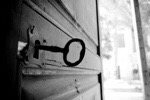 The final book of the Bible is aptly called Revelation, for it is a compilation of things that were revealed to John while banished to the Island of Patmos. In it, we will be given key insights into the future, but before the future is described, John takes time to describe Jesus. Instead of seeing the humble carpenter, meek and mild, John describes King Jesus in all His splendor and glory and refers to Him as “the ruler of the kings of the earth.” As ruler, Jesus declares He holds in His hands the keys to hell and death. As I read this, I have to ask, why would Jesus unlock the door to hell?
 he day Solomon’s Temple was built was one of the most glorious days in the history of Israel. It marked the completion of many of the promises God had given to His people down through the centuries. From a single man with a barren wife, a mighty nation had been formed, that now occupied the land that was promised to them. Their enemies had been defeated and held at bay, the people were experiencing a prosperity they had never dreamt would be possible, and the Tabernacle that spoke of mobility, was now replaced with a glorious, permanent Temple. On the day the Temple was dedicated, something quite remarkable took place. We are told, “the glory of the Lord filled the house of the Lord.” God’s presence was so “thick” the priests had to stop their ministry. It seems all they could do was fall down before the glory of God. Ezekiel lived about 300 years later and he too saw the Temple and the glory of God. This time, however, the glory was not filling the Temple, but rather was departing from it. He watched as the same glory that once filled the Temple, began to rise from it and slowly depart.
 Some of the imagery of the Bible is designed to get the attention of the reader. This passage certainly does that. Ezekiel explains, while he was sitting in his living room surrounded by the elders of Israel, he was suddenly lifted out of his chair by his hair, and transported hundreds of miles away to the city of Jerusalem. There he was shown a series of scenes that exposed the wickedness of the people, and in particular the leaders. One of those scenes took him to the the Temple where he dug a hole in the wall, found a hidden door, opened it up, and exposed the hidden sins of those who were supposed to be the spiritual leaders of the nation.
 Prayer is a critical part of our relationship with God. It is the means by which we are involved in the work of God on earth. Scripture reveals the things God desires to do when we join in prayer; as a result we get to see God work. There are many texts in Scripture making it clear that when we fail to pray, we fail to experience the works of God. Perhaps the most well-known is when James declares, “You have not because you ask not.” (James 4:2c) Because of the importance of prayer, as it relates to the work of God, John instructs us on how to pray. Verse 14 tells us what to pray for,
 When I read of the fall of Judah I am reminded of Achilles, who was one of the more famous characters in Greek mythology. He was the central figure of Homer’s Iliad, and the hero of the Trojan wars. The legend tells the story of Achilles, who was held by the ankle and dipped in the river Styx, providing him with supernatural protection in battle. As a result, his only weakness was his ankle that was not covered by the magical waters. It was this weakness that ultimately cost him his life.
 One of the greatest benefits of reading the Bible is that the Word of God will keep us from sin. The famous evangelist, D.L. Moody said, “Sin will keep you from this book and this book will keep you from sin.” The Psalmist wrote, “Your word I have hidden in my heart, That I might not sin against You” (Psalm 119:11). The Apostle explains one of the purposes of this letter is that we might not sin. In addition to the Word of God building us up spiritually, as we read through 1John, we will discover valuable insights that will help us to sin less.
 Sin is a funny thing. It promises pleasure, but can only bring pain. Day after day the Word of God was presented to the people, and day after day they rejected it. It was not until the walls of the city were breeched, and the city lit on fire, that many realized their mistake. The sin they thought was giving them life, was actually leading them into bondage.
 Jim Gallagher