Zechariah 9:9
“Rejoice greatly, O daughter of Zion!
Shout, O daughter of Jerusalem!
Behold, your King is coming to you;
He is just and having salvation,
Lowly and riding on a donkey,
A colt, the foal of a donkey.”
 A few years ago, during the height of the popularity of the tv show “American Idol”, I happened to be in a hotel room in Ghana. I turned on the tv and began flipping through the channels. Soon I found a show I did not know existed. It was called “West African Idol.” The premise was the same as the American version, but without nearly the budget. Instead of renting out the Nokia Theater, it was held in what looked like a high school auditorium. Instead of millions of dollars in LED lighting and sound equipment, it had a banner and a few spotlights. Clearly, the more prestigious the event the more glamour it gets.
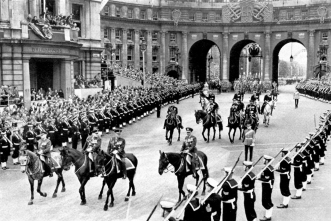
Kings have had coronation ceremonies for centuries. The more powerful the king, the more fanfare associated with his crowning. Here, Zechariah foretells of the coronation of Christ. The Bible calls Him the King of kings and Lord of Lords. His reign is eternal, righteous, and all reaching. Every creature will one day bow before Him, recognizing His authority and power. Yet when the time came for Him to be crowned, He rode into the city on a donkey and was celebrated with the waving of branches and singing by the common people; no bands, no lights, no drama.
In many ways, this event perfectly reflects the reign of the King of kings. One of His chief characteristics, and perhaps the platform of His campaign, was humility. He stepped out of glory and into humanity by taking on the form of a man, and coming in the humblest of means. At Christmas we are reminded that Christ was born in a stable, laid in a manger, and greeted by shepherds. His ministry was marked with humility. He is constantly seen taking the lowest place and serving others. We find him washing feet, reaching out to the sick, noticing the neglected and caring for all. His death was the ultimate expression of humility, as the One who created the trees, hung upon a cross made from its wood. Willingly, and without resistance, He allowed men to beat Him, drive nails through His hands and feet, and hoist Him upon the cross. When taunted to prove His power and come down from the cross, He humbly remained, where He could finish the work of providing atonement for the sins of mankind.
Although Jesus is the greatest ruler who will ever reign, He aptly presented Himself with meekness and humility. The next time we see Him, things will be much different. The bible declares that the One who came like a lowly lamb will return like a wild lion. He will one day burst through the clouds with sound of a trumpet, and the the hosts of heaven at His side. At this time, He will set up His kingdom and righteousness will reign from sea to sea.
Pastor Jim
 Recently, I was captivated by the different titles given to political leaders. In one news segment, I saw references to presidents, kings, prime ministers and even a supreme ruler. It is interesting the view men have of rulers. In some settings, they are seen as gods, while in other settings, servants of the people. Here, in Ezekiel, we get a glimpse into how God views those who rule over men. He sees them as representatives of Himself, and expects them to set an example for the people of what it means to be committed to Him. In God’s economy, a ruler of the people must first be a follower of YHWH. Israel’s greatest leader was described as a man after God’s heart (Acts 13:22). This evidenced itself in a desire to please God and properly represent Him to the people.
 The Psalmist compares the way he looks to the Lord, to the way a servant looks to a master. If we are going to understand the comparison, we need to consider how a servant would look to a master. It seems to me, one word would describe it best. A servant looks to his master obediently. The role of the servant is to do the will of the master, and in order to do that, he must look to the master for instruction and respond with obedience. The servant does not have the right to argue with the master, nor the time to complain about how unfair his task, in light of what the other servants are doing. The servant obeys.
 Things in the kingdom of God run very differently than they do in the kingdoms of men. This is particularly true of exaltation. The word exalted means “to raise in rank or power, to be elevated or lifted above.” What exaltation is, and how to achieve it, are different in God’s Kingdom.
 The tribe of Manasseh felt as though they had been ripped off when the land was distributed. They looked at their inheritance with disdain because it seemed small, and they considered themselves a great people worthy of so much more. Joshua explained to them that the land was theirs for the taking and their greatness would be proven as they overcame the obstacles that stood before them. It seems pretty clear, Joshua and Manasseh had very different views as to what greatness really meant.
  A disciple named Ananias is a somewhat obscure character in the narrative of Acts. We do not know how he first heard about Christ, what his occupation was, or his role in the local church. All we know is, when he was called to service, he rose to the occasion, and became an influential player in the life and ministry of Paul, the Apostle.
 Even in ancient times, life was often difficult. Conditions, beyond the control of an individual, would leave him in a place where he could not pay his debts. To address this issue, God set up a system in Israel where a person could become an indentured servant for a period of seven years. During this time the work done by the individual was treated as payment for the debt owed. At the end of seven years his debt was considered as paid-in- full and he was set free. This was called the year of release, and when it arrived the servant was set free and loaded up with provisions to begin a new lease on life.
 This verse is the conclusion of a parable Jesus spoke regarding God’s reward system. All those who responded to the offer of the vineyard owner received the same wage, whether they worked for a few hours or for the entire day. What a beautiful picture of God’s grace. Heaven is the great reward of all who respond to the call of God. Young Timothy and the thief hanging next to Jesus were both recipients of God’s manifold grace, both will forever live under the banner of King Jesus, walk the streets of gold, and experience the glories of living in glory.
 Jim Gallagher