Zechariah 9:9
“Rejoice greatly, O daughter of Zion!
Shout, O daughter of Jerusalem!
Behold, your King is coming to you;
He is just and having salvation,
Lowly and riding on a donkey,
A colt, the foal of a donkey.”
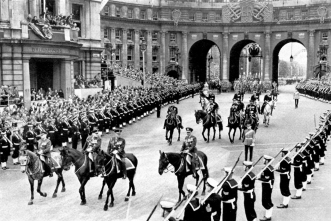 A few years ago, during the height of the popularity of the tv show “American Idol”, I happened to be in a hotel room in Ghana. I turned on the tv and began flipping through the channels. Soon I found a show I did not know existed. It was called “West African Idol.” The premise was the same as the American version, but without nearly the budget. Instead of renting out the Nokia Theater, it was held in what looked like a high school auditorium. Instead of millions of dollars in LED lighting and sound equipment, it had a banner and a few spotlights. Clearly, the more prestigious the event the more glamour it gets.
Kings have had coronation ceremonies for centuries. The more powerful the king, the more fanfare associated with his crowning. Here, Zechariah foretells of the coronation of Christ. The Bible calls Him the King of kings and Lord of Lords. His reign is eternal, righteous, and all reaching. Every creature will one day bow before Him, recognizing His authority and power. Yet when the time came for Him to be crowned, He rode into the city on a donkey and was celebrated with the waving of branches and singing by the common people; no bands, no lights, no drama.
In many ways, this event perfectly reflects the reign of the King of kings. One of His chief characteristics, and perhaps the platform of His campaign, was humility. He stepped out of glory and into humanity by taking on the form of a man, and coming in the humblest of means. At Christmas we are reminded that Christ was born in a stable, laid in a manger, and greeted by shepherds. His ministry was marked with humility. He is constantly seen taking the lowest place and serving others. We find him washing feet, reaching out to the sick, noticing the neglected and caring for all. His death was the ultimate expression of humility, as the One who created the trees, hung upon a cross made from its wood. Willingly, and without resistance, He allowed men to beat Him, drive nails through His hands and feet, and hoist Him upon the cross. When taunted to prove His power and come down from the cross, He humbly remained, where He could finish the work of providing atonement for the sins of mankind.
Although Jesus is the greatest ruler who will ever reign, He aptly presented Himself with meekness and humility. The next time we see Him, things will be much different. The bible declares that the One who came like a lowly lamb will return like a wild lion. He will one day burst through the clouds with sound of a trumpet, and the the hosts of heaven at His side. At this time, He will set up His kingdom and righteousness will reign from sea to sea.
Pastor Jim
 t is remarkable how we all think we are the exception to the rule. We believe wrong should be made right, injustice should be corrected, and sin should be punished, but we also believe that our wrongs are not that bad and should be overlooked. This is not a modern problem this is a human problem. Almost three thousand years ago, the inhabitants of Nineveh thought they could go on behaving however they wanted and would not face the judgment of God. They believed, others deserved it, but they themselves, were not as bad as their neighbors.
 This lesson is so important that it is set in an unforgettable backdrop. God allowed the most powerful ruler in the world to lose his mind, and behave like a wild beast, for a period of seven seasons, that he might learn that it is God who rules the affairs of men. While very few will go through Nebuchadnezzar’s experience, all of us need to come to the realization that the Most High rules the kingdom of men.
 King Nebuchadnezzar’s dream serves as a timeline of world kingdoms, from the time of Daniel until the return of Christ. The image refers to six kingdoms, five that are temporary, and one that will last forever. Four of the six have already come and gone, while the final two are still in our future. The fulfillment of the first four gives us assurance of the fulfillment of the final two.
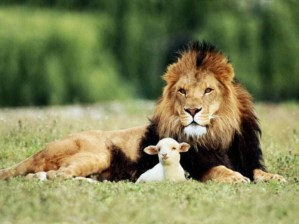 In beautiful, poetic fashion, Isaiah describes the conditions of the world after Christ returns to set up His kingdom. His purpose is to make all things right by establishing a rule of righteousness and peace. One thing is clear, in thousands of years of human governments, man has never been able to rule in righteousness or peace. Even today, with all of our advances, war continues to stain the face of the earth.
 Jim Gallagher