Psalms 110:1
The Lord said to my Lord, “Sit at My right hand, Till I make Your enemies Your footstool.”
 This psalm is one of the most detailed prophecies of Christ in the Old Testament. It goes into great detail to speak of the person and the work of the Messiah. In it we find reference to the deity of Christ when we read, “The Lord said unto my Lord.” This is nothing short of the Father referring to the Son as Yahweh. We also find reference to the Sufferings of Christ, in that he was consecrated a priest after the order of Melchizedek who would offer himself in our place in order to make a way for man to have access to God. We also see the resurrection and Ascension when we read, “Sit thou on my right hand.” And finally we see reference to the final Judgment, when all Christ’s enemies will be put under his feet.
Most of this Psalm has already been fulfilled. Christ, the Son of God came to as man and offered Himself as a sacrifice for our sin. After His crucifixion He conquered death, rose from the grave and ascended to the right hand of the Father where He intercedes on behalf of the believer and awaits the Father’s timing to return to earth as judge and King. The fulfillment of the bulk of these promises should stir us up as we await the time when Christ will come and reign. The way to be ready for that day is to accept His work on the cross in your place and follow Him completely.
Pastor Jim
Questions for Psalm 110
- Verse 1 is quoted five times in the New Testament (Matt 22:44, Mark 12:36, Luke 20:42-43, Acts 2:34-35, and Hebrews 1:13), all telling us that this psalm is referring to Jesus. Look those verses up and read the context.
- Look at verse 3. From what motivation should God’s people serve Him? Read 2 Corinthians 9:7 and 1 Peter 5:2.
- Jesus is described in verse 4 as a priest after the order of Melchizedek. Read about him in Genesis 14. Also read Hebrews 7.

 Several years ago I went to Orlando International Airport to pick up a young man whom I had never met. We had talked numerous times on the phone, but had not yet met in person. Before making the hundred mile drive to an airport that has almost thirty five million customers every year, I wanted to be sure I’d be able to pick my friend out of the hundred thousand people milling about. I asked him how I would recognize him. He responded by telling me, he had blond hair and was six feet, six inches tall. A few hours later, I walked into the airport and found him among the masses. Two characteristics were enough to distinguish him from the crowd.
 Micah prophesy’s specifically about the cause of the fall of the Judaean city of Lachish. Lachish was the second most important city of the Judah. It was located about 30 miles southwest of Jerusalem and was designed as a stronghold to protect the nation against invasions. It was situated on a hill, surrounded by hills and fortified with great walls and gates. This seemingly impenetrable city would suffer a great defeat when, under the leadership of Sennacherib, the Assyrian forces attacked. Micah declares that the cause of their defeat was sin. The inhabitants of Lachish seemed to have introduced many of the sinful practices, rampant in Israel, to the people of Judah. Their sin would be the cause of their fall. It is worth noting, no high walls or trained army can protect a nation that turns from God.
 Daniel is one of the most interesting books in scripture, it is filled with both history and prophecy. It records the encounters of Daniel in the palace of the king, and gives a prophetic picture of things to come. Chapter 7 focuses on two kingdoms that will arise after the fall of Babylon. The first was Persia, which is illustrated by a ram that no one could stop. The second was Greece, portrayed by a male goat with a notable horn. This goat moved with uncanny speed across the surface of the earth, until its horn was broken and four horns grew in its place. Daniel then focuses his attention upon one of the four horns, and watches as it turns against the people of God and His sanctuary.
 In Revelation 19, the scene in heaven is one of exuberant praise. We read of a great multitude joining in worship, and giving glory to the Lord. While there are many reasons to worship God, their praise stems from the fact that the marriage supper of the Lamb has come. To help us understand the relationship we have with God, the Bible uses a number of illustrations. We are referred to as the ‘children of God’, the ‘body of Christ’, the ‘church’, or ‘assembly of those who have been called out of the world’. Perhaps the most intimate of all is when the Bible refers to the Christian as “the bride of Christ.” Paul wrote to the Corinthians,
 King Nebuchadnezzar’s dream serves as a timeline of world kingdoms, from the time of Daniel until the return of Christ. The image refers to six kingdoms, five that are temporary, and one that will last forever. Four of the six have already come and gone, while the final two are still in our future. The fulfillment of the first four gives us assurance of the fulfillment of the final two.
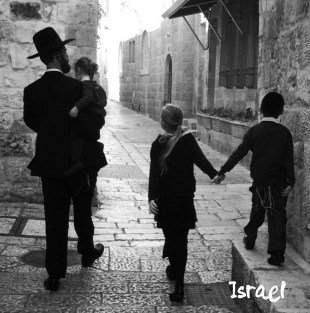 Without a doubt, the Bible is the most extraordinary book you will ever read. It is filled with fascinating stories designed not only to encourage moral behavior, but to reveal the character of God. Beyond that, the Bible actually paints a picture of what will unfold in the future. This type of writing is called prophecy, and its purpose is to prove the inspiration of the Bible, as well as to make us ready to face the Lord. One of the most intriguing areas of Biblical prophecy has to do with the nation of Israel.
 Predictive prophecy is one of the greatest evidences of the inspiration of Scripture. Peter explained, it was like a light shining in a dark place (2 Peter 1:19). Scripture is filled with two types of predictive prophecy. The first have already been fulfilled. They were future in the life of the prophet, but are in our past.
 Jim Gallagher