2 Chronicles 9:6
“However I did not believe their words until I came and saw with my own eyes; and indeed the half of the greatness of your wisdom was not told me. You exceed the fame of which I heard.”
 A person, standing at a distance and looking in at Solomon’s kingdom, would be struck by the enormous wealth and prosperity. We read of merchants traveling the world and returning with treasures of gold and precious stones, as well as exotic spices and animals. We are told, the landscape was marked with elaborate building projects, fine arts, and gourmet foods. Beyond question, the nation looked to be at its apex, and was envied by the world around them. In fact, we are told that delegations, including kings and queens, would make their way to Israel just to see its highly developed society and vast wealth. All the world wanted to be like Israel. Sadly, things were not really as they appeared. Underneath the surface was a cancer that was eating away at the fabric of the nation, and in a few short years would cause its collapse.
1 Kings 11:6-7
“Solomon did evil in the sight of the Lord, and did not fully follow the Lord, as did his father David. Then Solomon built a high place for Chemosh the abomination of Moab, on the hill that is east of Jerusalem, and for Molech the abomination of the people of Ammon.”
The real strength of Israel was not their military, their economy, their foreign policy, or the wisdom of their leaders. The real strength was their commitment to the Lord and His Word. They were a nation founded on the principles of God’s Word, which gave them a foundation that could support their vast growth and success. When they departed from the Lord, it was only a matter of time before the nation imploded.
Today, across our nation, we are celebrating freedom. Flags, fireworks, and family cookouts remind us that we are part of the greatest nation in the world. Our freedom has resulted in vast wealth, and has made us the envy of the world. People from all over the globe dream of making their way to America to find a better life. Unfortunately, some view freedom as a license to behave without law. They believe that freedom means that no one, especially not God, has the right to tell them their behaviors are wrong. They want to celebrate being free with licentiousness. Sadly, this will ultimately lead not only to greater bondage, but will destroy the fabric that holds our nation together.
If we want true freedom, it will never be found in breaking away from the laws of God, but in living in step with the One who designed us, loves us and desires the best for us.
Pastor Jim
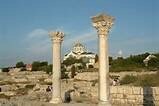 In addition to building the Temple, Solomon had two large pillars erected, which he named Jachin and Boaz. Jachin means to establish and Boaz means strength. Whenever a person approached the Temple, they would see these two massive pillars. A reminder that the nation, the kingdom, the Temple, and each of our individual lives, are established and strengthened by God.
 David lists two very important reasons, even motivators, for keeping the commands of God. First, he states by doing so, they would posses the land. Second, they would have something to leave behind for the next generation. These same principles should motivate each of us to live according to the Word of God.
 The Psalmist compares the way he looks to the Lord, to the way a servant looks to a master. If we are going to understand the comparison, we need to consider how a servant would look to a master. It seems to me, one word would describe it best. A servant looks to his master obediently. The role of the servant is to do the will of the master, and in order to do that, he must look to the master for instruction and respond with obedience. The servant does not have the right to argue with the master, nor the time to complain about how unfair his task, in light of what the other servants are doing. The servant obeys.
 David learned it is possible to have a great desire to do something, that is not the will of God. His heart burned within him to build a more permanent structure to house the Ark, and to provide a place for sacrifice. He prayed, sought godly counsel, and went forward with his plans, only to find out later, God had other plans for his life, and for the completion of the task. There are some important lessons we can glean from this story.
 This was David’s second attempt to bring the ark of the covenant to its new home in Jerusalem. The first time was an utter failure, resulting in death. This time, David wanted to be sure to do things right, so he consulted the Word of God. Because God designed the Tabernacle, He is also the one who wrote the instructions for how things were to operate. When David and Israel chose to look into the Word of God, they found the proper way to move the ark. What had once been a disaster, became a time of rejoicing; and the same will be true of us.
 David’s domestic policy included doing everything possible to ensure that the Lord was at the center of the nation of Israel. To this end, he sought to bring the Ark into the city of Jerusalem. In doing so, David committed one of the more common mistakes in ministry; doing the right thing, the wrong way. Instead of opening the Word of God and doing the necessary research on the subject of transporting the Ark, David used “common sense” and a pattern set by the Philistines. The Ark was placed upon a new a cart and driven to Jerusalem. Tragedy struck along the way and a young servant of the king was killed. The reason for the failure was that David had failed to seek the ways of the Lord.
 Proverbs are brief popular sayings that give advice about how people should live. A very popular modern proverb states that “the ends justify the means.” In other words, how something is done is not nearly as important as getting it done. We might even say, “there is more than one way to skin a cat” (although, I personally have no desire for a skinned cat). There may be many cases where the ends justify the means, but David found, as it relates to worship and serving the Lord, the method is as important as the activity.
 As I read through 1Chronicles, I am struck by the heroic actions of those who served alongside king David. His reign led Israel to the height of their success as a nation, and resulted in establishing peace with the surrounding nations. This success was not accomplished alone, but was a result of heroic men who stood tall in the midst of great difficulty and opposition. This seems to always be the case. One person put it this way, “Heroes are not born they are made”, and it is clear it is the circumstances they faced that made their actions heroic. In other words, Heroes are made when men and women stand up against insurmountable odds and risk their own lives for the sake of others.
 Young king Jehoash began his reign by repairing the Temple of the Lord. In order to fund the work, he had a large box built with a hole in the top, where people could place their offerings. He instructed the people to give as they “purpose in their hearts.” This freedom allowed each person to go home, sit with his spouse and pray, regarding what portion of their income should be given to the work of the Lord. Once decided, they would simply drop the funds into the box, without any fan fair or recognition. When the money was received, it was set apart for the work of the Lord. This is a very clear illustration of New Testament giving. Paul instructs us that we should give “as we purpose in our hearts” (2 Corinthians 9:7), and Jesus said, “we should not let our left hand know what our right doing” (Matthew 6:3). The New Testament model for giving is one that allows for “freedom.” Each one of us is free to give as we see fit. However, we must guard against misusing this freedom, by failing to take the time to sit before the Lord and determine what part of our income should be given to the work of God. There are at least two common mistakes we make that negatively influence our decision to give.
 Jim Gallagher