Isaiah 15:2
“He has gone up to the temple and Dibon, to the high places to weep. Moab will wail over Nebo and over Medeba; On all their heads will be baldness, And every beard cut off.”
 Isaiah describes the fall of Moab. He explains that it will be devastating and it will take place very soon. While this is clearly a divine prophecy which will include specific details, including the time in which this fall will take place, it did not come without warning. The Assyria troops were marching throughout the region and conquering all who opposed them. Since Moab was no match for Assyria, it was inevitable, they would soon be overthrown. I am struck by their reaction to these warning signs.
“He has gone up to the temple and Dibon, to the high places to weep…”
Knowing things were falling apart, the people became religious. They inundated the temples, made offerings, and cried out in prayer. The problem is, they were crying out to a god who could not help them, for he was the creation of their own hearts, minds and culture.
It is common today, on a personal and even a national scale, for people to cry out to God when things begin to go wrong. Whenever someone is hit by tragedy or personal difficulty, their prayer life begins to soar, and in some cases, they even make their way into a church. We see this happen on a large scale whenever a community, state, or nation is struck with calamity. The problem is, people often cry out to the god of their imagination, instead of bowing to the true and living God. A god we fashion after our own design, is not a god who is able to assist us when our world falls apart. There was help available for Moab. Had they turned to YHWH, they would have been delivered just as Judah was. There is help for you and me if we will turn to Christ.
Pastor Jim
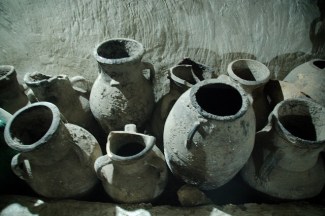 Living conditions in Israel had become very difficult; the nation was constantly at war with its enemies, years of drought had created wide spread famine, and morality was in decline. These things affected the living condition of everyone, regardless of their social status. In the story before us, we are introduced to a poor widow who is facing starvation. Without giving details, we learn that her husband, a godly man, had died and she and her sons were on their last leg. All her resources were gone and the creditors were at the door. In her distress, she sought counsel from Elisha who asked a simple question, “what do you have?” To which she replied, the only thing left in the house was a jar of oil. Elisha went on to instruct her to borrow vessels from her neighbors and fill them with oil from the jar. When she did, they found that the oil poured as long as their was an empty vessel to put it in. I think there are at least two valuable applications from this passage.
 Jim Gallagher