Leviticus 19:19
“You shall keep My statutes. You shall not let your livestock breed with another kind. You shall not sow your field with mixed seed. Nor shall a garment of mixed linen and wool come upon you.”
 One of the primary purposes of the book of Leviticus is to teach us that God is holy, and requires holiness from His people. The opening verse of Chapter 19 declares, “‘You shall be holy, for I the Lord your God am holy.” Holiness carries the idea of being set apart. Something that is holy, is something set apart for the Lord’s use. In the same way, someone who is holy has set themselves apart from anything that would defile them, so they might be fit for use by the Lord. As Moses explains the details of how to live a holy life, he speaks to the people regarding their fields and their garments.
“You shall not let your livestock breed with another kind. You shall not sow your field with mixed seed. Nor shall a garment of mixed linen and wool come upon you.”
There are some very practical reasons behind these statutes. For example, a garment of mixed materials will wear differently. Jesus referred to putting new, unwashed cloth on an old garment. He explained that when the new cloth shrinks, it will tear away from the garment. The primary reason for this statute was to teach spiritual lessons. Israel was to learn, they were different from the world around them, and needed to live differently. In a similar passage, God explained it was unlawful to yoke different kinds of animals to the same plow. Paul, spring-boarding off of that principle, stated,
2 Corinthians 6:14
“Do not be unequally yoked together with unbelievers. For what fellowship has righteousness with lawlessness? And what communion has light with darkness?”
As believers, we are called to be different from the world; that difference requires separation. That does not mean we are to live in isolation, but we are to seek to be the influencer, rather than those who are influenced. Relationships have proven to be the downfall of many. Too often, a Christian, out of loneliness, will lower their standard and begin to date an unbeliever. In time, they become emotionally invested in the relationship and do not see that they are being drawn away from the Lord. The same thing was true for Israel. We read, time and time again, of them establishing covenants with the unbelieving nations around them; only to find they are soon led away from the Lord and into foreign, idolatrous practices. We have been called to be the light of the world. In order to be that light, we must live committed to the Lord, and separate from the sinful practices of the world we live in.
Pastor Jim
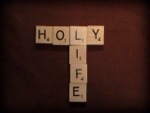 Perhaps, the clearest message from the Book of Leviticus is, God is Holy and requires holiness from His people. Rather than leaving it to us to determine what is holy and what is not, God has given us His Word. In the pages of Scripture, we will learn how to “distinguish between holy and unholy, and between unclean and clean.” Holiness was first achieved through the Old Testament sacrifices. God established a system by which sin could be forgiven through the shedding of blood. These sacrifices are no longer required because Jesus Christ, the Son of God, paid the penalty for all sin, when He died on the cross. We are made holy when we receive Christ, and our sins are forever washed away. Those who have been made holy are required to live holy. Holiness carries the idea of being set apart. A person who is holy is a person who has set themselves apart from others, by determining that he/she wants to live to please the Lord. It is the holy person who is looking into the pages of their Bible to determine the meaning of life and how to live. It is the holy person who, when faced with a decision, will seek answers from the Word of God, or when facing conflict will seek to solve it through the Wisdom of the Word. Holiness is achieved when we set ourselves apart to the Lord, and live out His Word.
 The Law of God was given as a standard to show the people their need for a Savior, and as a pattern to ensure that the people lived righteous lives. Here we find a principle that would protect Israel from becoming like the surrounding pagan nations. God is declaring that popular opinion is not what determines right from wrong. Almost every child has heard his parents say, “Would you jump off a cliff if your friends were doing it?” We attempt to instill within our children the principle that just because the crowd is behaving a certain way, it does not make it right. Sociologist refer to “mob mentality.” They say it is possible for individuals to lose the ability to think for themselves, and begin to follow whatever the crowd is doing. Living in a democratic state can make this even more complicated. God declares to Israel that popular vote is not the standard of righteousness. If all the people vote to erect a golden calf to represent God, that does not make God a gold cow. His righteous standard will never be changed simply by getting a crowd to reject it.
 We understand that marriage was designed by God. He created man and woman, and designed marriage as the most intimate of all relationships. But why? What is the purpose of marriage? If we were to walk the streets and interview people, asking them, “Why did you get married?”, I think the most common reply would be, “I got married to be happy.” I don’t think every married couple is happy, but I think that it is the motivation behind most marriages. We think being with that person will make us happy. But I want you to notice what we read regarding God’s design in marriage: “It is not good for man to be alone…” (Genesis 2:18). It was not for man’s happiness alone that God designed marriage, but instead, for his good.
 Once the waters had resided and the ark settled, Noah and his family exited the ark to begin a new life. They would have to survey the land, build shelter, plant crops, and much more. It is interesting to me, of all the events that must have transpired, the Scriptures only focus upon a few. We read in Genesis 8, Noah offered sacrifice to the Lord. We can assume, after all he experienced, he was still a very godly man. We read in Chapter 9, a covenant between God and man was re-established, based upon the shedding of blood. When we come to the story before us, having settled in the new world with his new life, we find Noah indulging in wine and becoming fall-down drunk. As we continue through the Bible, we will see clearly that drunkenness is both foolish and forbidden. In our text, it is not the sin of Noah that is the focus of our attention, but the sin of his son, Ham.
 The story of the flood is a story of judgment and redemption. Mankind had turned its back on God. Moses is careful to describe the condition of the world at that time;

 Jim Gallagher