Isaiah 58:6
“Is this not the fast that I have chosen:
To loose the bonds of wickedness,
To undo the heavy burdens,
To let the oppressed go free,
And that you break every yoke?”
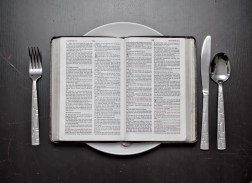 In one of His longest recorded sermons, Jesus spoke of 3 spiritual exercises that every believer should be practicing. He spoke of giving, praying and fasting. Fasting is the practice of giving up food for a period of time in order to learn to deny ourselves and to devote more attention to the things of God. Sadly, instead of viewing fasting as a way to draw near to God the people in Isaiah’s day were treating it as a religious responsibility. It was almost as though it was part of their checklist. They felt that fasting itself made them spiritual and they saw little need for their lives to be affected by their professed relationship with God. Isaiah declares that a real fast will will give evidence of a transformed life.
William Booth was the man behind the Salvation Army. About one hundred years ago he was asked what he thought were the greatest dangers the church was facing in the years ahead. His response is quite intriguing. He said:
“The chief danger that confronts the coming century will be religion without the Holy Ghost, Christianity without Christ, forgiveness without repentance, salvation without regeneration, politics without God, heaven without hell.”
In other words he spoke of a form of Christianity that has little impact upon the way a person lives their life. He foresaw churches filled with people who raise their hands in worship, drop checks in the offering box and perhaps even sign up for ministry opportunities yet they fail to allow the Spirit of God and the Word of God to transform their lives.
Instead of emphasizing religious duties we should be seeking to become like Jesus in every possible way. A real commitment to Christ will show itself in a life that is changed.
Jim

 As the prophecies of Ezekiel come to a close, he describes the allotments of land that will be given to each of the tribes of Israel. It is striking to me that seven times in the chapter theses districts are called “holy.” The inheritance the Lord gives to His people is always holy, and the life we live should be lived in holiness.
 For the priest to be involved in ministery, there must be a change of apparel. What was appropriate for some things, was not appropriate for others. This imagery is continued throughout Scripture.
 The tribulation years will be the most difficult time period the earth has ever known. Any hardship we have ever experienced, will pale by comparison, to say the least of the trials during those few years. It is prudent that we each do everything we can to avoid being left here when these events begin to transpire. The way out is to trust in, and surrender to, Christ as Lord and Savior. If you have not yet made the decision to receive Christ, stop reading and pray. Invite Him to forgive your sins and be your Lord.
 Israel, in Ezekiel’s day, was a mess. The people had long ago left the Word of God and chose to follow the ways of the world around them. This led them into gross immorality, putting them at odds with God. As a result, the Babylonians were fast approaching the city and the people would be destroyed. Prophet after prophet had filled the airwaves with warnings of coming judgment and the way of escape. Sadly however, instead of turning to the Lord, the people remained entrenched in their immoral ways, hoping against reality, that life would continue unchanged, regardless of their backslidden state. All the while, God was looking for men and women who would respond to him in repentance and obedience, but none were found. In many ways times have not changed, God is still looking for those who will build a wall and stand in the gap.
 Over the years I have discovered something about myself, I am better at projects than I am at maintenance. My yard is a classic example. We worked hard to irrigate, lay sod, and plant trees, and our yard looked good for a little while. As time went on however, we discovered that neglect undid much of our labors, and before long, things looked rather unkept. It seems like Azariah had a similar problem; while he desired to live pleasing to the Lord and made great strides, he still neglected certain areas that needed his attention. One area in particular, was the “high places”, where altars were built to false gods. These shrines were destructive to the nation because they served as an open door to lead the people away from the true and living God. The only way to properly deal with the high places was to aggressively attack the problem. Azariah needed to mount an offensive and destroy the altars.
 The book of Judges ends on a tragic note. Personal immorality, social chaos, and civil war mark the close of the book. This was certainly one of the darkest times in the history of the people of God. The rape and murder of a young woman led to a heated battle between the tribes of Israel. Instead of facing their true enemies, Israel was caught up in civil infighting that cost the lives of some of their most gifted men. When all is recorded, we find they were simply fighting all the wrong battles.
 ‘The end justifies the means’ is the governing principle in the life of many. The implication is very clear, it does not matter how something is done, as long as positive results are reached. However, Moses would learn, though this is a common principle among men, it is not a principle for ministry.
 Jim Gallagher