Numbers 33:52
“. . . then you shall drive out all the inhabitants of the land from before you, destroy all their engraved stones, destroy all their molded images, and demolish all their high places; . . .”
 God described the land He was giving Israel as a land that flowed with milk and honey. He was of course speaking figuratively of the blessed life that the children of Israel would experience within the land. This blessed life was conditional upon their obedience to Him, and their obedience included some driving out, and some demolition. They were instructed to tear down all of the images and the places where the false gods were worshipped. They were to leave nothing that would serve as a source of temptation. Moses went on to explain,
“. . . those whom you let remain shall be irritants in your eyes and thorns in your sides, and they shall harass you in the land where you dwell.”
Sadly, as the story unfolds, we will learn that Israel failed to drive out and demolish, and for centuries struggled with the temptation of the sins they allowed to remain in the land.
It is not difficult to draw a parallel between their experience and our lives. In order for us to experience the abundant life that Jesus offers, we also must do some driving out and some demolition. There are things that cannot remain in our lives if we are going to successfully walk with Christ. Those things include anyone or anything that will be an irritant, tempting us to sin and leading us away from the ways of God. Israe failed to obey this command partly due to the fact that they liked having some of those things around. They placed value on what God had banned and it was not long before they were caught in sin.
Stand back for a moment and examine the things in your life. Is there anything that needs to be removed? The way to do it is to go to the cross and lay it at the feet of Jesus, asking for His pardon, and strength to never pick it up again.
Pastor Jim
 Isaiah is speaking of something that only God can do. Even today, we face physical and natural difficulties that all of our human resources are unable to solve. Many who are bound by these things find that life is more like a barren wilderness than a running spring. Some have tried all sorts of techniques and programs only to find they are powerless to change. What we need is more of an encounter with the God, who can make lame men walk and bring water to a parched and arid land.
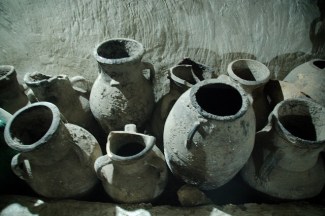 Living conditions in Israel had become very difficult; the nation was constantly at war with its enemies, years of drought had created wide spread famine, and morality was in decline. These things affected the living condition of everyone, regardless of their social status. In the story before us, we are introduced to a poor widow who is facing starvation. Without giving details, we learn that her husband, a godly man, had died and she and her sons were on their last leg. All her resources were gone and the creditors were at the door. In her distress, she sought counsel from Elisha who asked a simple question, “what do you have?” To which she replied, the only thing left in the house was a jar of oil. Elisha went on to instruct her to borrow vessels from her neighbors and fill them with oil from the jar. When she did, they found that the oil poured as long as their was an empty vessel to put it in. I think there are at least two valuable applications from this passage.
 Jim Gallagher