Exodus 1:14
“And they made their lives bitter with hard bondage . . .”
 The conditions of life were growing worse and worse for the people of God living in Egypt. They had once been a highly favored part of the nation, even receiving special treatment. Now they were being persecuted, and faced annihilation. Their freedoms had been taken away, and their children’s future seemed bleak. As the story unfolds, we are told one of their own will rise to a place of prominence within the nation. What hope must have stirred within the people, when they learned that the prince, the son of Pharaoh’s daughter, was actually a believer. It would seem, it was only a matter of time before the political climate would change, and the people of God would be favored again. Sadly, that was not the case. The story progresses and we find Moses, the man of God, is incapable of rescuing Israel from bondage, and must flee to the wilderness. All hope seemed lost for the people of God. Little did they know, God had a plan. He would deliver His people, but it would not be through political reform.
Exodus 2:23-25
“ . . . Then the children of Israel groaned because of the bondage, and they cried out; and their cry came up to God because of the bondage. So God heard their groaning, and God remembered His covenant with Abraham, with Isaac, and with Jacob.”
As conditions deteriorated, the people of God began to cry out to God. They realized their hope would not be found in politics or policy. They realized their only hope would come from heaven. They groaned and cried out, and those cries met the ears of God, and deliverance was given.
The present condition of our world has its parallel in the pages of Exodus. The Christian once held a favored status in our land. Religious freedoms were granted because the men and women who were involved in the founding of our nation realized the need for the hand of God to be upon us. Sadly, as time has moved on, that status has been lost, and the Christian is looked at as a threat. Just as deliverance for Israel was realized in crying out to God, so our hope is not in Washington, but in heaven. If we want to see the moral climate change, we must obey the call of Scripture and humble ourselves and pray (2 Chronicles 7:14). We must also realize, our greatest need is not a balanced budget or a reformed foreign policy. What the world needs is Jesus.
Pastor Jim
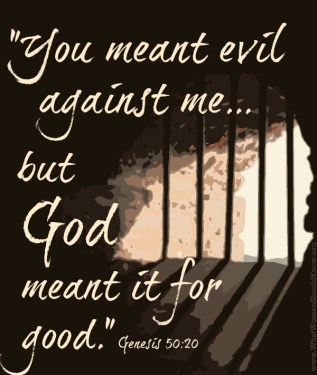 We have all faced times in our lives when we have looked up from our circumstances and wondered, “How God could truly love me and let me go through this.” If any man had a right to allow his circumstances to call into question the loving-kindness of God, it was Joseph. I can only imagine the horror he must have experienced when his brothers suddenly turned on him and cast him into a pit. That scene must have played over and over in his mind, perhaps even while he slept. That first bitter act put Joseph’s life on a course that would seem to be leading ever downward, from kidnapped victim, to slave, to convicted rapist; forgotten in a foreign prison cell. Many men, perhaps even most men, would allow these circumstances to harden them as they plotted revenge on those who ruined their life. But Joseph proved himself to be unlike most men when, instead of looking back with vengeful hate, he looked up and saw the hand of God redeeming what had been destroyed. Long before he found himself face to face with his brothers, Joseph had gotten face to face with God, and learned that the hand of God had been guiding his life for a single purpose – the salvation of souls. In what is one of the most beautiful and searching statements in scripture Joseph declares,
 Chapter 25 seems to be about being ready. Jesus warns about a final day of reckoning, when the sheep will be separated from goats. To ensure that we are ready for what is coming, Jesus gives two parables. The first explains the need to be born again, the second the need to be busy about the Lord’s business.
 As the day of his death rapidly approached, Jacob gathered his children together and spoke regarding what lay ahead. The writer of Hebrews summed up this chapter by saying,
 As the book of Genesis unwinds, we find Jacob getting very close to the end of his life. He knows, just about the only thing left is his departure. While he may not have a whole lot of life in front of him, he does have decades to look back upon. As he reflects upon his life, it is easy for him to see how the hand of God was with him all the way. As he looks back, he focuses upon two things.
 The Psalmist, in a time of great despair, wrote, “Why are you cast down oh my soul, and why are you in turmoil? Hope in God…” (Psalm 42:5). Hope serves as an anchor when the storms of life seem as though they are going to overwhelm us. As a child of God, we have the hope that His Word is eternal, and while circumstances may change, His promises remain trustworthy. We have the hope that in the midst of life’s hardships, He will never leave us, but will walk through the fires with us, even carrying us. Perhaps our greatest hope, is that Jesus has promised He will return for us. There is a time coming, perhaps in the very near future, when “as the lighting comes from the East and flashes to the west, so also will the coming of the Son of Man be.” This great hope was foremost in the minds of the disciples, as the events of Matthew 24 unfolded, and the chapter is Jesus’ answer to the question, “when.”
 Jacob and his eleven sons were given the best that Egypt had to offer. While the Egyptians suffered under the famine and were forced to forfeit their lands to the state in exchange for food, Jacob’s sons were given the best pasture land. While jobs were scarce, Jacob’s sons were hired to be the chief herdsmen for Pharaoh’s flocks. In a time of great difficulty, they were experiencing such blessings that Jacob predicted the family would multiply greatly and become a strong nation. It is striking to me that the favor they were enjoying, was not their own merit, but the work of another. The same is true of us. We have forgiveness of sin, eternal life, and the favor of God, not based on our own work, but due to association with Christ. All who are in relationship with Him are adopted sons and daughters of God, and joint heirs with Jesus. We are no longer looked upon as strangers who live distant from God, or as enemies who are fighting against God, but we are viewed as children who are loved by God. All the favor of God is given to those who are his by relationship. It matters not the sins we have committed in the past. Throwing a brother in a pit, then lying to dad about his death, were not the issue. All that mattered, was Jacob and his sons were related to Joseph. Sit back for a few moments and rejoice over the fact that you belong to God, because of what Jesus has done for you. You are a blood-bought, highly favored child of God, who has been given every spiritual blessing in Christ Jesus.
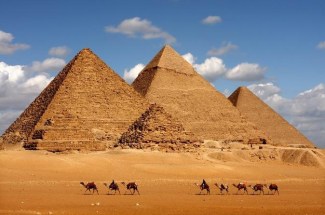 Egypt has already played an interesting role in the narrative of Genesis. It was to Egypt that Abraham fled when famine arose, and it was to Egypt, Isaac looked, when famine struck in his day. I find it interesting that the same God who warned Isaac not to go to Egypt, sends Jacob there. We might say, Jacob was given a great commission to go to Egypt, and to further his kingdom. Later in this chapter, we read that seventy people left for Egypt, however, when Exodus begins, that number is probably well over two million.
 Paul prayed for the Ephesian Christians that they would comprehend the love of God which he described as beyond our ability to understand.
 Everyone of us has had the experience of being mistreated. For most, it has been the little things, like our character being questioned or our feelings hurt. Others, like Joseph, have experienced their entire life being altered by the deeds of another. The story of Joseph is significant in so many respects, not the least of which is, he used his newfound position of power, not to retaliate, but to rescue. It is nothing short of a miracle that this man was not bitter, angry and vengeful. I wonder if we can uncover the secret behind his success.

