Acts 1:1
“The former account I made, O Theophilus, of all that Jesus began both to do and teach, . . .”
 The book of Acts is a sequel to the Gospel account, written by Luke. He declares, in this opening verse, the purpose for writing the Gospel account and the book of Acts. He states that the Gospel records what Jesus began to do; and the book of Acts, what He continues to do. Since Jesus is alive from the dead, the story of the Bible is a continuing one. John closed his Gospel account declaring that all the books in the world could not hold all that Jesus did for humanity. As amazing as it may seem, Jesus is not finished. The resurrection is not the end of the story. It is the transition point where the work of Jesus transfers from being accomplished outwardly through His life on earth, to the inward working of His Spirit in the life of all who believe.
Another thing that strikes me about Luke’s statement, is that he personally had so much to say. He is looking back to what Jesus has done, and looking forward to what Jesus will do. I think that is a great way to live. It would be wise for each of us to chronicle the things Jesus has done for us. Perhaps taking the time to make a list of all the things that have been accomplished as a result of your positive response to the Gospel message. In Ephesians, Chapter 1, Paul records that Jesus chose us, predestined us, adopted us, accepted us, redeemed us, forgave us, is coming back for us, and has filled us with His Spirit to guarantee that we belong to Him. Paul also recognized that “He who had begun a good work in Him would complete it” (Philippians 1:6).
Take some time to reflect on all that Jesus has done for you, and look forward with expectation to the things He still desires to accomplish. It may be that He will turn another fisherman into the world’s greatest fisher of men.
Pastor Jim
 On the verge of entering the Land of Promise, Moses reminds the people they have a choice to make. Upon entering the land, they were to gather the entire nation in the valley between Mount Ebal and Mount Gerazim. On one mount, half of Israel‘s leaders were to read the blessings that would befall a people who obeyed the Word of God. The remainder of Israel’s leaders stood on the other mount to declare the curses that would befall them if they ignored, or rebelled against the Word. In addition to the spoken Word, they were to write the Word on large, whitewashed stones that were easy for all to read. Beyond question, the key to Israel’s success and happiness was their obedience to the Word.
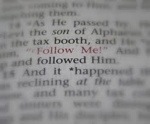 Much has happened since Peter first met Jesus. In a few short years, it seems as though a lifetime has transpired. Peter, the fisherman, has become Peter, the apostle. The young man who used to spend his days on the Sea of Galilee pursuing fish, is now a man who has spent over three years fishing for men. I imagine, at one time, his stories were all about his biggest catch, or perhaps times of weathering one of the storms for which the Sea of Galilee was famous.
 The story of Abraham is the story of God, that has been rewritten in the lives of countless thousands over the years. Abraham was an unknown shepherd living in ancient Babylon when he heard the call of God. He was to separate from the world he lived in, and commit himself to following the Lord. As he, daily, walked by faith, and took simple steps of obedience to God, his
  A man, condemned of certain crimes, was to be beaten as a form of punishment and humiliation. The beating was reserved for the wicked, while the righteous were exonerated. Years later, a “Kangaroo Court” met in Israel, gathered false witnesses, and condemned the Son of God to death, for the high crime of blaspheme. He was taken to the Roman authorities, where He was again tried, convicted and condemned. Part of the sentence meted out to Him was the Roman scourging. Unlike the Jewish law that carried with it a level of mercy, the Roman scourge was designed, not only to punish, but to kill.
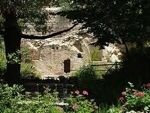 Mary saw Jesus, but the circumstance she was in, and the experiences she was facing, caused her to conclude that He was a gardener. It was not until she heard His Word, that she clearly understood who He really was.
 Moses is reminding the people of the laws of God. These were the standards which would govern individuals and the nation. If they followed His precepts, they would be blessed by God, and would be attractive to the world around them. Like a light in the darkness, Israel would draw men to the Lord. Tucked away in this list of regulations is a principle, that if heeded, will lead to a blessed and happy marriage. Certainly, a happy and healthy family life will serve as a strong witness in a world. A world where so many marriages are falling apart, and children are the victims of a fallen and sin-filled world.
 n John 12:8, Jesus said, “The poor you will have with you always…”; history has certainly proven that to be a truthful statement. Even today, with all the advances in science, medicine and technology, there are still those who struggle to make ends meet, and have to have their basic needs met. Understanding that this would be a constant struggle, God established a system within Israel whereby the needs of the poor could be satisfied. It was based upon both the grace of God and the love of His people.
 Jesus is facing the battle of His life. We could even say it was the battle for His life. All the political power of Israel was manipulating the power of Rome, to execute the Son of God. Yet Jesus remained silent. We know He wields the power to overcome these attacks. We read that He calmed the storms, healed the sick, cast out demons, and even raised the dead. Yet now, when it seemed to matter the most, He refused to lift a finger or say a word.