Acts 23:11
“But the following night the Lord stood by him and said, ‘Be of good cheer, Paul; for as you have testified for Me in Jerusalem, so you must also bear witness at Rome.’”
 Webster defines a trial as, “A test of faith through subjection to suffering or temptation.” Paul’s current situation may be the text book case of a trial. He came to Jerusalem with the goal of sharing Christ with his friends and countrymen, spent his time preparing to share with them, but before he ever spoke a word, he found himself under attack. After his unjust arrest, he had two opportunities to share the Gospel; both times he was cut short, as the people become enraged with him. To make matters worse, his Christian friends had warned him not to go to Jerusalem in the first place. They said he would be beaten, arrested and perhaps killed. Paul believed the trip was the Lord and ignored their warnings. Now, incarcerated and facing the threat of death, it would be natural to feel as though he had failed the Lord and his situation was hopeless.
I love the fact that while facing this great trial, the Lord spoke to Him. The voices surrounding him said he was a blasphemer and he was going to die, and perhaps a voice within, saying he had failed. However, one voice cried out louder than all the rest. It was the voice of Jesus, providing Paul with a promise that would carry him through all the trials of the next few years. Prison in Rome, the threat of death, a late night escape, forgotten in Caesarea, ship wrecked on an island, and being bitten by a poisonous viper, could not shatter the strength given from these few simple words uttered by Christ. No matter how bad things became, he was promised safe passage and opportunity in Rome.
The Word of God is like that. A timely promise from God is able to sustain us though whatever difficulties we are facing. I have had times that seemed hopeless, and all I had to sustain me was a simple truth from the Word of God. As time continued, I found that no force on earth could shake the foundation given by the promise of God. No matter what you are facing, get in the Word and allow Jesus to whisper His great and precious promises, and strengthen you from within.
Mark 13:31
“Heaven and earth will pass away, but My words will by no means pass away.”
Pastor Jim
Questions in Acts 23
- Who made up the council that Paul was speaking too?
- Ananias commanded those who stood by to strike Paul. What was Paul’s response?
- Whitewashed walls-In those days, under the Law, a Jew could not touch a dead body. Over the countryside there were rock-hewn sepulchers. Through the years some became half hidden or buried. If a Jew touched any of these areas, they would have to go through purification rites before they could enter the temple because they were considered unclean. They had touched something that was touching a dead body, so to protect the people; the Jews would paint these tombs with whitewash so they would stand out. Read Matthew 23:27. Paul picked up on a term that Jesus used. What do we have in our life that looks good on the outside, but is full of dead bones on the inside? Is there something you need to confess it to the Lord? Let His blood cleanse you and make you new!
- The Lord gives Paul new direction and encouragement then the trouble begins. What happens to Paul next? How does the Lord get Paul to Rome?
Old Testament:
Judges 12- The Wrong Fight
Judges 13- Did I Do That?
 After his arrest, Paul shared Christ with the mob that tried to kill him. They listened intently to him because his message was fascinating and relevant. It seemed they had a true interest, and even an openness to the Gospel. But that all changed once Paul mentioned the Gentiles. That single word caused the hearers to close their ears, harden their hearts, and reject the message of Christ.
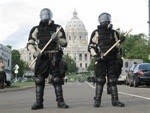 The scene in Acts 21 might best be described as a riot. The people of the city had lost all sense of the Temple worship, and had become a violent mob determined to put Paul to death. Their rage escalated to the point where the Roman soldiers had to almost beat them back, in order to pull Paul out of their clutches. We read, when they reached the stairs (the way of escape) Paul could no longer walk on his own, but had to be carried by the soldiers. It seems that even after the arrival of the soldiers, the crowd was still taking shots at Paul.
 When reading the Bible, we should always look for application to our personal lives. In some texts, the truths to apply are very straight forward, others, are a little more difficult to find. This passage tells the story of a young man, Eutychus by name, who nods off during a Bible study and ends up dead. I think the passage is a warning of more than the need to stay awake at church. Eutychus’ fall is a perfect illustration of the way sin works.
 Ephesus was a very large city with a diverse population. It is estimated, at the time of Paul’s visit, there may have been in excess of 400,000 people living in the city. Ephesus was the largest city in Asia Minor, and one of the largest in the empire. Because of its location, on a trade route, the city was very wealthy; it had become an important center for commerce. Like any large wealthy city, Ephesus had its share of vice. One of the greatest was temple prostitution. Overlooking the city, was the Temple to Diana; which was an awe-inspiring site. It drew pilgrims from all over the world to come and worship. The worship practice included sexual immorality.
 Paul and his companions had been traveling from city to city and town to town; sharing the gospel, making disciples, and planting churches. They spent relatively short periods of time in each of these places until Corinth; we read, Paul remained there for a year and six months. Corinth did not seem to be one of the easier places for ministry. Scripture tells us the Jews were hardened to the Gospel. Paul and his companions faced persecution in the form of threats, arrest, and beatings. Later we read, even the gentiles who responded to the Gospel were very carnal; and Paul had to use cunning to ensure that they learned to trust Christ and not men. Yet, with all this, we read that Paul remained a year and six months pastoring this young and growing flock. What were the things that enabled him to remain, while facing such difficulty?
 Paul and his companions were traveling throughout Greece. They had been in Philippi, Thessalonica, and would soon be in Athens. These were all very prominent cities. Philippi was the foremost city in the region of Macedonia, and Athens remained the scholastic capital of the Empire. Berea, on the other hand, was a small town, which in the large scale of things, was pretty insignificant. No one would be impressed with someone from Berea. They were not known for their universities, trade, or monuments.
 The Scriptures are filled with men and women who had a tremendous impact upon their world for the kingdom of Heaven. Timothy is one of those men. We are first introduced to him here, in Acts 16. He is described as a disciple who was well-spoken of throughout the cities of Lystra and Iconium. The word disciple means, a learner and a follower. It describes a person who has chosen to surrender to Christ, follow Him, and allow the Word of God to write upon the tablet of his heart. The disciple lets God’s Word direct his private life, public life, family life and church life. Timothy was a disciple of Christ, and set an example for the believers around him on what it meant to follow Jesus. As we continue to follow Timothy’s story, we find he became a traveling companion of Paul and Silas; bringing the Gospel throughout Asia minor and into Europe. Later we learn he became the pastor of the church in Ephesus, and was the recipient of two New Testament letters.
 A great controversy arose in the early church as a result of the Gentiles coming to faith in Christ. Some of the church leaders in Jerusalem were suggesting that after coming to Christ, these new converts must be circumcised and keep the ceremonial laws. I think their motives were probably sincere. They wanted to see these new believers behaving correctly, and determined the best way for them to do so, was to make rules. We see the same thing happening in the church today. A young woman may come to Christ, and still dress the way she did before she believed, so the church is pressured to have a dress code. Or a young man comes to Christ and still listens to the music he did before coming to Christ; the church wants to establish a ban on secular music. Now it is true, there are people who dress inappropriately, and listen and watch things that they shouldn’t, but the question is, what is the best way to help them grow? The legalists, from Jerusalem, thought it was through the establishing of a system of rules to keep them in check. The apostles came up with a different plan, they wrote a letter exhorting the Gentiles to abstain from three things.
 We read, they spoke in a way that resulted in many believing in Christ; which in turn, results in eternal life. It is worth noting that there is a way to speak which will have an impact upon others for eternity. Their speaking included at least three things:
