Psalm 50:16-17
“But to the wicked God says: ‘What right have you to declare My statutes, or take My covenant in your mouth, seeing you hate instruction and cast My words behind you?’”
 One of the strangest phenomenon that I have experienced, over the years, is to hear the unbeliever quote the Bible. It fascinates me how those who have read so little of it seem, at times, to consider themselves the authority on what it says. Those who are living a lifestyle which the Bible does not condone, and quite frankly, they know to be wrong, are so quick to pull words from the Bible to justify their behavior.
“Do not judge me” seems to be the anthem of the sinner. We have all heard the Hollywood rhetoric, or political speeches with the token Scripture reference, from a person whose lifestyle is contrary to the teaching of the Word of God. Perhaps the most common abuse of the Bible is when a person who is living in sin, uses the promises, given to the child of God, as a source of comfort in their difficulty. To that, God has some very strong words,
“What right have you to declare My statutes, or take My covenant in your mouth, seeing you hate instruction and cast My words behind you?”
The promises of the Word of God are given to those who are in a covenant relationship with God. Those who have looked at the cross, recognized that they are sinners, and received Christ as their Savior, are the ones to whom the promises of God are written. It is that person who is able to take the covenant in their mouth, and benefit from the promises of God.
The promises of God are abundant, and should draw us into a deeper relationship with Him. He promises our sins are removed from us, as far as the East is from the West, casting them into the depths of the sea. He promises that we become brand new in Christ; all our past failures are forgotten, and life gets a fresh new start. He promises power to overcome the struggles, even addictions that we face in life. He promises peace to calm us in the midst of life’s biggest storms, joy that wells up in us like a fountain, love that is shed abroad in our heart, removing all prejudices and hate. A love so great that enemies become allies, and victims become friends. He promises to never leave us or forsake us, to be an ever-present help in time of need, One to whom we can cast all of our cares, concerns, fears and struggles. He promises to be a shelter from the storms of life, much like a walled city or a high tower, which provided safety for those in battle. He promises to be the bearer and giver of abundant life; a life with meaning and purpose, a life that He has preordained with good works for us to walk in, and experience. But all these promises are given to those who are in a covenant relationship with Him through Christ.
If you have not yet received and surrendered to Christ, there are promises for you. He invites you to come to Him, “Come to Me, all you who labor and are heavy laden, and I will give you rest” (Matthew 11:28). Take Him up on His offer. Stop striving against God and surrender all to Him. Watch how He takes your life and transforms you into the person He has designed you to become.
Pastor Jim
Psalm 50
- Sometimes we forget about the Majesty of God, how does the description of God in verse 1-3 change your view of Him?
- The Psalmist goes into great detail to explain that God is not in need. If He were hungry, He would not ask man for help. Contrast that with what He declares in verse 15.
- We often hear people who are not following God making reference to the Word of God. It is even common for those who do not read the Bible to misquote the Bible to defend their actions. According to verse 16-17, what is God’s reaction to that?
- Verse 23 requires a response. What response will you give to it today?
 We learn two very important things about following Jesus from this one verse.
 Even a casual reading of the Old Testament will lead to the conclusion that Israel did not win their battles on their own. When armies are overthrown by the rushing waters of the Red Sea, walls toppled with rams horns, and a shepherd defeats a warrior with a sling and stone, it is clear that the hand of God is behind the victories. There are times when Israel went to battle in their strength, but those are the times of failure, not of triumph. It is hard to forget the Battle of Ai. Joshua sent the troops into battle without first seeking guidance from the Lord, only to see his army retreat and many soldiers lose their lives (Joshua 7:2-6). Clearly, the strength behind the success of the nation of Israel was the leading and empowering hand of God.
 This Psalm begins with the Psalmist describing his hunger for more of God. In a beautifully poetic fashion, he compares his desire for God to a deer panting for water. Thirst is one of our most basic drives, second only to the body’s need for oxygen. He is not only stating that he desires more of God in his life, but that he cannot live without Him. Psychologists have made lists of basic human needs for mental and emotional health. These lists often include things like companionship, communication, a good diet, human touch, self acceptance and proper rest. Unfortunately, they often neglect man’s greatest need; our need for God. Paul wrote:
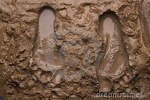 Without giving us the details, David describes the condition of his life as being in a horrible pit of miry clay. A mire is an area of wet spongy earth, like a bog or marsh. David was saying he was stuck in a very difficult place, and it seemed as though there was no escape. Unfortunately, life can be like that. Even when we are walking with the Lord, we come to times of great difficulties that seem to carry on and on, without hope of ever ending. Sometimes, these miry bogs are the result of what appears to be unrelenting waves of trials. Before we get our head up from one strike, we are hit with another. John Bunyan referred to these times as “The Slough of Despond.” if you are currently facing one of these times in your Christian walk, be encouraged with two things.
 I am a sports fan. I enjoy watching a variety of athletics, and am always fascinated when an athlete achieves victory, almost effortlessly. No matter what the opponents do, they are unable to stop him. Over the years, I have come to understand that those who seem to win with the least effort, are really the ones who have put in the most effort. They are the ones who are first in the gym and last out. Their diets, workouts, sleep patterns, even off days, are regimented so as to keep them in the best possible condition for victory.
 There can be great value in getting away from our manmade world and looking at the creative work of God. Seeing the beauty of His creation seems to give us new perspective on His love, power, and glory. I can recall one particular sunset in Africa that was so magnificent and seemed to last for an hour. The sky was filled with an array of colors, like I had never seen before. I recall how the view of the snow capped Austrian Alps, and the water falls of Kauai captivated me, filling me with awe and amazement at the beauty of God’s handiwork. I am sure you have a list of your own experiences that cause you to celebrate the beauty of creation. That being said, the Psalmist begins to talk about what God views as true beauty. He declares;
 I am not a farmer, and do not have a lot of experience with either horses or mules. With my limited knowledge, I have observed, that bits are used in horses for an entirely different reason, than they are used in mules. Horses want to run free; they must be broken, and the harness and bit are to keep them from running off on their own. Mules are stubborn; they are not known for running off, but for standing still. The bit and harness are used on the mule to get them going. While I do not have a lot of familiarity with horses and mules, I have spent lots of time with Christians. It seems to me, we are by nature, a lot like either the horse or the mule. Some of us have the tendency to run ahead. We are the self-reliant; the ones who are constantly thinking we can handle things, and forgetting our need to cling to the Lord. Others of us, are more mule-like. We are the ones who tend to sit back, always aware of our own weaknesses. Those weaknesses keep us from venturing out into what God would have us do.
 When Moses pleaded to see the Glory of God, the Lord responded by passing before him and revealing His nature. He declared Himself to be merciful and gracious. The word gracious speaks of the giving nature of God. It is His desire to give what is best to man. James, addressing a group of trial-ridden Christians, reminded them, since God is gracious, every good and perfect gift comes from Him (James 1:17). The message of the Bible has a whole lot more to do with what God gives us, than what we are to give to Him. Hosea reminded Israel of what God had done for them,
 Jim Gallagher