Psalm 69:1-2
“Save me, O God! For the waters have come up to my neck. I sink in deep mire, where there is no standing; I have come into deep waters, where the floods overflow me.”
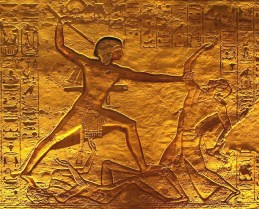 This Psalm is fulfilled in at least three ways. First, it expresses an actual time in the life of David. His enemies have mounted up against him with such great force that he feels like one who is drowning in a mighty flood. The enemies he faces are those who have sided with Saul, to seek his life; those who were against him because he had chosen to follow God, and finally, and perhaps his greatest enemy, is his own sin. In the midst of the battle for his own life, sin had mounted up like an army, seeking to destroy him. David’s victory over these enemies is found as He seeks the mercy of God. He writes, “Hear me, O Lord, for Your lovingkindness is good; turn to me according to the multitude of Your tender mercies.” Psalm 69:16
Second, this Psalm has fulfillment in the daily life of the child of God. At times, we find ourselves facing enemies far greater than ourselves. Trials can be like a mighty force that we cannot overcome; there are even times when people turn against us. Like Job, when we need someone the most, we often feel like we have been deserted. However, the greatest enemy, the one that wages the most intense battle against us, is personal sin. We all know those times when our easily besetting sins seem to mount an offensive so great that we wonder when we will be taken down. It is in those times, we must follow the example of David, and look up to Heaven’s throne of Grace and cry out, “Hear me, O LORD, for Your loving-kindness is good; turn to me according to the multitude of Your tender mercies.”
Finally, this is another of the Messianic Psalms. It has it’s fulfillment at the Cross of Christ. Verse twenty-one draws our attention to the crucifixion; “They also gave me gall for my food, and for my thirst they gave me vinegar to drink” (Psalm 69:21). Jesus was also surrounded by enemies. The enemies He faced were the religious leaders, Roman soldiers, a multitude of onlookers, and even some who had once followed Him. They were all now crying out for His execution. When Peter explained the events of the crucifixion in Acts 2, he made it clear that it was not the Romans, or even the Jewish leaders, who were responsible for the execution of Christ. He said to a group of people, many who had traveled from a distant land, and were not present at the death of Christ, “ . . .you have taken (Him) by lawless hands, have crucified, and put to death” (Acts 2:23). Jesus went to the cross to satisfy the wrath of God. His death provided a way for the insurmountable forces of sin to be conquered, and eternal life to be provided. Our cry for mercy can be answered because of the atoning death of Christ. Even when our sins wage war against us, and it seems like a force too great to withstand, we can cry out to heaven for mercy, forgiveness and victory.
Take time to look to His mercy today.
Pastor Jim
 The physical battles Israel faced illustrates the spiritual battles the Christian faces.
 Have you ever noticed, when movie stars are walking the red carpet, for one of their many awards presentations, they are not asked what they are wearing, but who they are wearing? One of the marks of success is getting a particular designer to make you a one-of-a-kind outfit.
 Have you ever had one of those times when you are craving something, but you are not sure what it is? When that happens to me I tend to keep trying things, in an attempt to satisfy a craving that I cannot define. What is true with physical hunger, is also true in the spiritual realm. God created us with a need for Him. This need evidences itself with a desire to find meaning in life, answers to what lies beyond this life, and a craving to worship.
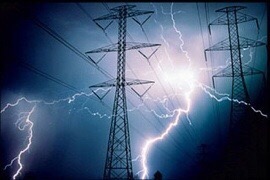 A number of years ago, I came home from a long day of work, at the end of an even longer week. I was worn out and hungry. Since I was the only one home at the time, I was facing a battle within. My stomach insisted on being fed, but the rest of me demanded rest. Too broke to order out, and too tired to fix a meal, I laid down on the couch and began flipping the channels. I stopped on a show called, “Lifestyles of the Rich and Famous.” This a series that displayed the possessions of extremely wealthy individuals. If memory serves me, this was the only time I had ever seen the show. The episode followed the life of a the king of a small Middle Eastern country, whose name I have forgotten. While his subjects lived in poverty, he was one of the wealthiest men alive. They showed his palace, which was the size of a small college campus. What really got my attention, however, was when he traveled to the U.S. He wanted to stay in a particular room in a hotel in Beverly Hills, but the room was booked. Instead of finding another room, or another hotel, he bought the hotel, remodeled it to his liking, and stayed in the room of his choice. Lying there on the couch, I was struck by two contrary things. The first was this man’s great wealth, the second was how it had no effect on me whatsoever. I was still too broke to go out and too tired to cook.
 In the early eighties, a well-known Christian band wrote a song called “God Rules.” In some ways, it became the anthem of many young Christians. I remember having a “God Rules” bumper sticker on my car, and proudly writing it on my school notebook. To me, that phrase was a slang term meaning little more than the fact God was best. I believe the Psalmist is saying much more than that, he is speaking of the sovereignty of God. The word sovereign means ‘to possess supreme power.’ David is declaring that God has supreme power over His people.
 No matter where we live, we are faced with the storms of life. Growing up in California, I was constantly reminded of the great earthquake that was looming on the horizon. We were told that because of the fault lines, one day California would fall into the sea. Upon moving to Florida, the new fear was the hurricane. A few years back, a particularly large hurricane had developed in the warm waters of the South Atlantic. The atmospheric conditions were such to allow this storm to grow larger and larger as it traveled north. All of the models had it making landfall just outside of my home town. Having never experienced a hurricane before, I was glued to the Weather Channel for information. A hurricane this large had never been tracked before; it was larger than the state of Texas, and had wind speeds over 140 mph. People up and down the coast of Florida, Georgia, and South Carolina were heading west for safety. One news station reported that hotels, as far as Kentucky were filling up, as people searched for a safe place in the storm. I felt stuck. I did not know where to go. In a last-minute decision, we drove across the state and stayed with friends, figuring though we might not be avoiding the storm, at least we would have the comfort of going through it together. Fortunately, the storm moved north, missing Florida all together, and reducing in size drastically as it met cooler waters. I came to the realization, no matter where we live, we are faced with the storms of life, and must determine where we will run for safety.
 This Psalm is a prayer set to music. In It, David is crying out to God to deliver him from those who are seeking to end his life. The title of the Psalm gives us insight into the situation he is facing.
 David refers to God’s book. This is not a reference to the Word of God; for he tells us that the content of this book is David’s tears. He is not the only writer to refer to a book that God possesses. The Apostle John wrote,
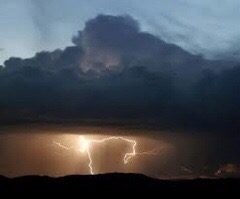 We live in a world of contrast. On the one hand, we see the fingerprint of God all around us, demonstrating His goodness. Earlier in the Psalms, David wrote, “The heavens declare the glory of God; And the firmament shows His handiwork” (Psalm19:1). When we see the beauty of creation, the birth of a child, or the love of betrothal, we are struck by the goodness of God.
 Jim Gallagher