Joshua 19:9
“The inheritance of the children of Simeon was included in the share of the children of Judah, for the share of the children of Judah was too much for them. Therefore the children of Simeon had their inheritance within the inheritance of that people.”
 The Christian life was never meant to be a solo activity. The challenges and the opportunities of life are often much more than the individual believer can handle. Solomon wrote of the practical benefits of fellowship when he declared, “Two are better than one, because they have a good reward for their labor. For if they fall, one will lift up his companion. But woe to him who is alone when he falls, for he has no one to help him up. Again, if two lie down together, they will keep warm; but how can one be warm alone? Though one may be overpowered by another, two can withstand him.”
David wrote of the beauty of fellowship when he declared, “Behold, how good and how pleasant it is for brethren to dwell together in unity! It is like the precious oil upon the head, running down on the beard, the beard of Aaron, running down on the edge of his garments. It is like the dew of Hermon, descending upon the mountains of Zion; for there the Lord commanded the blessing – Life forevermore” (Psalm 133:1-3).
In our text, Joshua speaks of the value of fellowship when he explains that the inheritance given to Judah is too much for them to handle on their own, so the tribe of Simeon will assist them, and they will share the land.
As you move forward in your relationship with Jesus, it is vital to establish good and godly relationships with people who will help you become the person God wants you to be. The Bible is filled with advice that will help you make good relationship decisions.
Proverbs 12:26
“The righteous should choose his friends carefully, for the way of the wicked leads them astray.”
Proverbs 27:17
“As iron sharpens iron, so a man sharpens the countenance of his friend.”
Proverbs 27:6
“Faithful are the wounds of a friend, but the kisses of an enemy are deceitful.”
Proverbs 27:5 ”
“Open rebuke is better than love carefully concealed.”
Pastor Jim
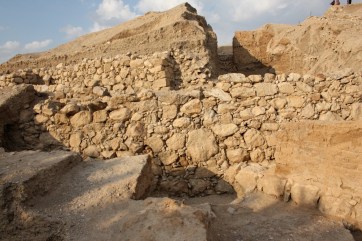 As Joshua stood overlooking Jericho, wondering how to defeat such a mighty foe, I am sure none of his plans included marching his soldiers around the walls while playing music and eventually shouting at the top of their lungs. I imagine he used his extensive battle experience to carefully discern the weaknesses in Jericho’s wall, while studying the lay out of the land to see where the high points were, or how they might build a siege mound against the city. The pragmatic mind of a seasoned soldier would have a lot to say about how to conquer a well-defended city, but in this case, God had an entirely different approach in mind. If victory was to come, Joshua and all Israel, for that matter, had to understand that the ways of God are different than the ways of man.
 The purpose of setting up a rudimentary stone altar was to remind the generations to come of the faithfulness of the Lord. Whenever someone walked by the area and saw stones stacked upon one another, it would be clear that it was not caused by nature, but by design and with a purpose. When they asked about the stones, the older generation would recall the stories of what God did, as a means of teaching the works and the ways of God. As time went on, these stone altars were scattered in many places throughout the land. The one we read about here is unique, not because of the way the stones were stacked, but because these stone would never again be seen since they would be covered by the flowing waters of the Jordan river. Why build an altar of remembrance that no one would ever see?
 The sun is about to set in the life and ministry of Joshua. After spending years being mentored in ministry by Moses, he ventured out as Israel’s leader. He led the nation as they furthered the kingdom of God, and became established in the land. Now that his time is coming to an end, Joshua will give his final message to the people he has so faithfully served. His message could be divided into four main points of exhortation that would lead to their continued success.
  Years ago Bob Dylan wrote a song that included the phrase, “You’ve got to serve somebody.” Centuries before, the Psalmist declared, we will become whatever we choose to serve. He stated, if we serve false gods we become like them, but if we choose to serve the True and Living God, we will become like Him. Our lives will be determined by what masters us.
 The tribes of Reuben, Gad and Manasseh chose to separate from the rest of Israel and live east of the Jordan River. Although the Jordan is not a large river, and crossing it during the dry season would not be a difficult endeavor, this division would prove to be very costly. It is clear from the event recorded in Joshua 22, the effects of this separation were felt immediately. Once they returned to their land, they attempted to create a connection with the rest of Israel by erecting an altar that resembled the one in Shiloh. In their minds, this would keep them connected to Israel, even when the Jordan separated them. Their actions were considered to be idolatrous by the other tribes, who pleaded with them, that rather than building an altar, why not cross the Jordan and join the nation. A religious symbol is not the solution for a wandering heart.
  A lot of my childhood was spent on the ocean. From as far back as I can remember, my dad had a boat and we would spend the summers taking vacations to Catalina Island. It was a great way to grow up. We would spend day after day on the boat, fishing, swimming, diving and exploring. When the vacation finally came to an end and we made the 27 mile journey back to the mainland, I experienced an interesting sensation. After so much time rocking back and forth on the boat, the ground seemed especially solid.
 Many of the cities throughout Israel were designated as “Cities of Refuge.” This meant, if a person accidentally caused the death of another, he could flee to one of these cites for protection from the revenge of the victim’s devastated family. The rules governing these cities were simple. If death was caused accidentally, the guilty could flee to the city, and remain safe within its borders, until the death of the reigning High Priest. After his death, the crime was completely forgiven and the individual was free to return to his normal life. This law was designed to curb vengeance, but also serves as a picture for us of the work of Christ.
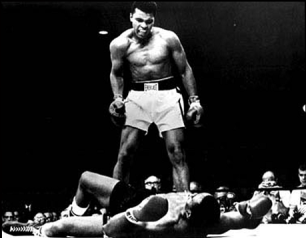 The tribe of Manasseh felt as though they had been ripped off when the land was distributed. They looked at their inheritance with disdain because it seemed small, and they considered themselves a great people worthy of so much more. Joshua explained to them that the land was theirs for the taking and their greatness would be proven as they overcame the obstacles that stood before them. It seems pretty clear, Joshua and Manasseh had very different views as to what greatness really meant.
  After the great deliverance from Egypt, forty years in the wilderness, and five years in the Promised Land, there were still tribes who were neglecting to possess their possessions. In other words, the land that had been promised and distributed to them, remained in the hand of their enemies. Joshua, in a form of harsh rebuke, declares that the reason for their failure to take the land was simple neglect. Perhaps some used the age old excuse of “I have just been so busy” or “I don’t have time right now.” We know for sure, some of them made the excuse of the task being too difficult.
 Jim Gallagher