John 4:9
“For Jews have no dealings with Samaritans.”
 A few years ago, I was in Serbia speaking at a conference for some of the local churches. On the last day of our trip, we were invited by one of the pastors to visit a Gypsy village, where he had been ministering to the families for some time. Upon arriving, we broke up into groups, and began visiting some of the homes of the sick, and gathering with many of the children. After about an hour, a woman from a nearby town approached us. She stood out to us because she was wearing a beautiful purple dress with a purple overcoat. One of the other pastors approached her; she asked him who we were and what we were doing here. He responded that we were from America, and had come to Serbia to teach the Bible and share Christ. Her response was quite shocking. She said, “I meant what are you doing in the Gypsy’s village. No one cares about the Gypsies.” We were a little shocked by her statement, but began to share with her that Jesus loved all people, even those who were despised by the world. She made a decision to receive Christ that day because of His love for those whom no one else cared.
The world has always been filled with “Samaritans”. Even today, there is no shortage of people about whom no one seems to care. People, whose lifestyle has isolated them from society. It is important to keep in mind that Jesus was always drawn to those who the world rejected. Two thousand years later, and Jesus still “must go through Samaria.” He wants to use us, His church, to reach them with His love.
Keep your eyes open; there is a world out there in need of Christ. A world filled with neglected, even rejected people, who Jesus loves and died for.
Pastor Jim
 Much has happened since Peter first met Jesus. In a few short years, it seems as though a lifetime has transpired. Peter, the fisherman, has become Peter, the apostle. The young man who used to spend his days on the Sea of Galilee pursuing fish, is now a man who has spent over three years fishing for men. I imagine, at one time, his stories were all about his biggest catch, or perhaps times of weathering one of the storms for which the Sea of Galilee was famous.
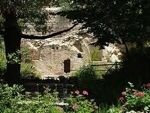 Mary saw Jesus, but the circumstance she was in, and the experiences she was facing, caused her to conclude that He was a gardener. It was not until she heard His Word, that she clearly understood who He really was.
 Jesus is facing the battle of His life. We could even say it was the battle for His life. All the political power of Israel was manipulating the power of Rome, to execute the Son of God. Yet Jesus remained silent. We know He wields the power to overcome these attacks. We read that He calmed the storms, healed the sick, cast out demons, and even raised the dead. Yet now, when it seemed to matter the most, He refused to lift a finger or say a word.
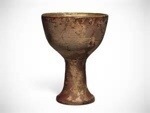 In the garden of Gethsemane, Jesus spent hours in prayer. The portion of the prayer recorded for us had to do with a cup. The event is recorded in Mark 14:35-36,
 Perhaps the best title for John 17 is, “The Lord’s Prayer.” As the hour of His betrayal, arrest, and crucifixion approaches, Jesus takes time to pray for His disciples. His prayer, while encompassing many things, seems to focus upon three thoughts.
 Much of what Jesus said was shocking to the ears of the disciples. He spoke with a wisdom that was otherworldly. They may have become used to the fact that Jesus was going to say things that surprised them, but I do not think anything could prepare them for the statement Jesus made here. Earlier, He had been speaking about His betrayal and death, He now declares they will be better off without Him. For over three years, these men have been with Jesus. They have watched as He transformed lives, and listened as He declared truths about the Kingdom of God. Now He is speaking about leaving, and declaring they will be more effective with Him out of the way. I know Peter is the one who is known for objecting to Jesus, but I find myself objecting on His behalf. I cannot think of a single scenario where it would not be better to have Jesus around. If I were fishing, boating, preaching, visiting the sick, feeding the hungry or facing the Pharisees, I think it would always be better to have Jesus there, than to be by myself. How could Jesus say such things? What conditions could make it better to have Jesus absent, rather than present?
 We live in troublesome times. Many face the fear of cancer or some other illness. The economy has shattered the comforts we once thought we had, or would enjoy. And after thousands of years of written history, the heart of man has not improved. We read of nations on the brink of war, violent crime haunting even the most peaceful communities, and global acts of terrorism on the rise. All this, and sadly much more, cause us to fear for our own safety, and for the future for our children and grandchildren.
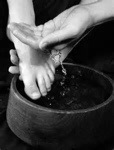 Living in Israel at the time of Christ, it was impossible to walk the streets of Jerusalem without getting dirty. Open-toed sandals in a desert climate made for dirty streets and dirty feet. One solution was the custom of foot washing. Whenever a guest entered a home, the host was responsible for ensuring that the feet of the guest were washed. When Jesus gathered with the disciples for the Passover meal, he took on the role of the host, and began to wash their feet. As expected, Peter had something to say about the actions of Jesus. First he resisted, to which Jesus explained,
 Jim Gallagher