Genesis 48:15-16
“God, before whom my fathers Abraham and Isaac walked,
The God who has fed me all my life long to this day,
The Angel who has redeemed me from all evil…”
 As the book of Genesis unwinds, we find Jacob getting very close to the end of his life. He knows, just about the only thing left is his departure. While he may not have a whole lot of life in front of him, he does have decades to look back upon. As he reflects upon his life, it is easy for him to see how the hand of God was with him all the way. As he looks back, he focuses upon two things.
First, he recalls how God provided for him. There were times in his life when he had next to nothing and other times when he lived with abundance. There were even times when it looked like he would lose all he had worked so hard to attain, yet in each of the seasons of life, he found God had been faithful to provide for him and his family.
Second, he reflects upon the grace of God. Like all of us, Jacob had a life of highs and lows. There were times when his life was a beautiful example of a believer, and other times when his life was marked by lack of trust and living for self. No matter what had transpired, when he looked back, Jacob could see the hand of God redeeming him. I have to believe, one of the highlights in his life, was to have his relationship with Esau restored, by the grace of God.
Whatever you are facing, why not look back and reflect upon the hand of God caring for you through the years. If there are things that are left unredeemed, take some time to ask Him to repair that which is broken.
Pastor Jim
 The Psalmist, in a time of great despair, wrote, “Why are you cast down oh my soul, and why are you in turmoil? Hope in God…” (Psalm 42:5). Hope serves as an anchor when the storms of life seem as though they are going to overwhelm us. As a child of God, we have the hope that His Word is eternal, and while circumstances may change, His promises remain trustworthy. We have the hope that in the midst of life’s hardships, He will never leave us, but will walk through the fires with us, even carrying us. Perhaps our greatest hope, is that Jesus has promised He will return for us. There is a time coming, perhaps in the very near future, when “as the lighting comes from the East and flashes to the west, so also will the coming of the Son of Man be.” This great hope was foremost in the minds of the disciples, as the events of Matthew 24 unfolded, and the chapter is Jesus’ answer to the question, “when.”
 Jacob and his eleven sons were given the best that Egypt had to offer. While the Egyptians suffered under the famine and were forced to forfeit their lands to the state in exchange for food, Jacob’s sons were given the best pasture land. While jobs were scarce, Jacob’s sons were hired to be the chief herdsmen for Pharaoh’s flocks. In a time of great difficulty, they were experiencing such blessings that Jacob predicted the family would multiply greatly and become a strong nation. It is striking to me that the favor they were enjoying, was not their own merit, but the work of another. The same is true of us. We have forgiveness of sin, eternal life, and the favor of God, not based on our own work, but due to association with Christ. All who are in relationship with Him are adopted sons and daughters of God, and joint heirs with Jesus. We are no longer looked upon as strangers who live distant from God, or as enemies who are fighting against God, but we are viewed as children who are loved by God. All the favor of God is given to those who are his by relationship. It matters not the sins we have committed in the past. Throwing a brother in a pit, then lying to dad about his death, were not the issue. All that mattered, was Jacob and his sons were related to Joseph. Sit back for a few moments and rejoice over the fact that you belong to God, because of what Jesus has done for you. You are a blood-bought, highly favored child of God, who has been given every spiritual blessing in Christ Jesus.
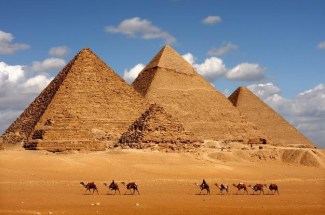 Egypt has already played an interesting role in the narrative of Genesis. It was to Egypt that Abraham fled when famine arose, and it was to Egypt, Isaac looked, when famine struck in his day. I find it interesting that the same God who warned Isaac not to go to Egypt, sends Jacob there. We might say, Jacob was given a great commission to go to Egypt, and to further his kingdom. Later in this chapter, we read that seventy people left for Egypt, however, when Exodus begins, that number is probably well over two million.
 Paul prayed for the Ephesian Christians that they would comprehend the love of God which he described as beyond our ability to understand.
 Everyone of us has had the experience of being mistreated. For most, it has been the little things, like our character being questioned or our feelings hurt. Others, like Joseph, have experienced their entire life being altered by the deeds of another. The story of Joseph is significant in so many respects, not the least of which is, he used his newfound position of power, not to retaliate, but to rescue. It is nothing short of a miracle that this man was not bitter, angry and vengeful. I wonder if we can uncover the secret behind his success.
 Guilt is a powerful emotion, and very effective motivator. We can all think of times when we have been “guilted” into doing something we did not want to do. But perhaps the greatest impact guilt has on us, is not what it gets us to do, but what it keeps us from doing. I can only imagine how the guilt must have haunted Joseph’s brothers all those years. I imagine every time something went wrong they must have, at the very least, considered it to be the hand of God coming against them for their sin. Sadly, these guys are not alone. Many Christians live under the heavy weight of their past failures. Whenever they begin to make any forward progress in the Lord, they are held back by the thoughts of a past decision, failure or deed.
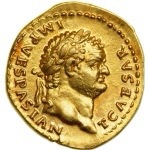 As the cross approaches, so does the opposition to Jesus. The religious leaders are desperately trying to turn the people against Jesus. In this case, they sent the young Pharisees, and the Herodians, a political sect that favored the Jews being ruled by Rome. When they arrived, they must have thought they had come up with the perfect question. No matter how Jesus answered, He would end up polarizing himself. “Is it lawful to pay taxes to Caesar?” If Jesus says “yes”, he will find himself at odds with the people. They will think of Him, and all He has done and said, as simply a political movement in support of Rome. If He says “no”, He will find himself the enemy of Rome and be a wanted man. I can almost feel the excitement of the religious leaders as the question is posed. Jesus’ response is as insightful as it is brilliant.
 We have no way of knowing how long Simeon remained incarcerated in Egypt, while his brothers attempted to convince Jacob to send them back. The assumption is, quite some time passed, since it would have been foolish to make the lengthy and dangerous journey to Egypt and not purchase enough food to last a long time. However long it may have been, time ran out when the food ran out. Jacob’s hand was forced, as they looked at the reality of facing another season without rain and without food. The words of Judah to his father are quite revealing, “If we had not lingered, surely by now we would have returned this second time.” Had the difficult decision been made earlier, the trip would have been a memory, and the family would already be reunited. Instead, all the work remained in front of them. I wonder if this statement could be made regarding our spiritual condition? It seems there are works in each of us, God has been desiring to do, but we have been fighting against them. We see the task as too big, and don’t think we will ever be able to accomplish it. Procrastination will never make a decision, or a task easier. Waiting will only make things more difficult. If you have been neglecting to put off sin, or put on righteousness, keep in mind, had you done it when God first asked, the work would be finished, and you would be already be tasting the sweet fruit of victory. Don’t wait another minute to get busy with that to which God has called you.
 Jesus told a story that the original audience understood to be speaking of how they were rejecting the Son of God. In response to the story, Jesus refers to builders who had rejected the “chief cornerstone.” In many ancient buildings, the foundation was supported by a cornerstone, without it, the foundation would not be able to support that which was built upon it. Jewish lore tells the story of the building of Solomon’s Temple, a project that took many years. The massive stones for the Temple were quarried some distance away from the Temple site and delivered to the builders. As they were laying the foundation, a very oddly shaped stone,that did not seem to fit, arrived. The contractor, thinking the quarry had made a mistake, had the stone thrown away. It was pushed down a hill into the city trash dump. Sometime later, the contractor sent to the quarry asking for the chief cornerstone. The quarry sent back a message saying it had already been delivered. When the contractor argued that he had never received the stone, someone reminded him of the oddly shaped stone, the one that did not seem to fit his plans, that he had thrown in the trash. Sure enough, that was the stone that would support the whole building. With great effort, they raised the stone out of the rubbish heap, and continued erecting what would become a building which would bring glory to God and salvation to man.
 Jim Gallagher