Joshua 19:9
“The inheritance of the children of Simeon was included in the share of the children of Judah, for the share of the children of Judah was too much for them. Therefore the children of Simeon had their inheritance within the inheritance of that people.”
 The Christian life was never meant to be a solo activity. The challenges and the opportunities of life are often much more than the individual believer can handle. Solomon wrote of the practical benefits of fellowship when he declared, “Two are better than one, because they have a good reward for their labor. For if they fall, one will lift up his companion. But woe to him who is alone when he falls, for he has no one to help him up. Again, if two lie down together, they will keep warm; but how can one be warm alone? Though one may be overpowered by another, two can withstand him.”
David wrote of the beauty of fellowship when he declared, “Behold, how good and how pleasant it is for brethren to dwell together in unity! It is like the precious oil upon the head, running down on the beard, the beard of Aaron, running down on the edge of his garments. It is like the dew of Hermon, descending upon the mountains of Zion; for there the Lord commanded the blessing – Life forevermore” (Psalm 133:1-3).
In our text, Joshua speaks of the value of fellowship when he explains that the inheritance given to Judah is too much for them to handle on their own, so the tribe of Simeon will assist them, and they will share the land.
As you move forward in your relationship with Jesus, it is vital to establish good and godly relationships with people who will help you become the person God wants you to be. The Bible is filled with advice that will help you make good relationship decisions.
Proverbs 12:26
“The righteous should choose his friends carefully, for the way of the wicked leads them astray.”
Proverbs 27:17
“As iron sharpens iron, so a man sharpens the countenance of his friend.”
Proverbs 27:6
“Faithful are the wounds of a friend, but the kisses of an enemy are deceitful.”
Proverbs 27:5 ”
“Open rebuke is better than love carefully concealed.”
Pastor Jim
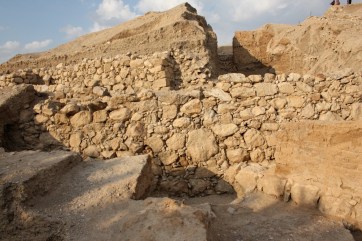 As Joshua stood overlooking Jericho, wondering how to defeat such a mighty foe, I am sure none of his plans included marching his soldiers around the walls while playing music and eventually shouting at the top of their lungs. I imagine he used his extensive battle experience to carefully discern the weaknesses in Jericho’s wall, while studying the lay out of the land to see where the high points were, or how they might build a siege mound against the city. The pragmatic mind of a seasoned soldier would have a lot to say about how to conquer a well-defended city, but in this case, God had an entirely different approach in mind. If victory was to come, Joshua and all Israel, for that matter, had to understand that the ways of God are different than the ways of man.
 The purpose of setting up a rudimentary stone altar was to remind the generations to come of the faithfulness of the Lord. Whenever someone walked by the area and saw stones stacked upon one another, it would be clear that it was not caused by nature, but by design and with a purpose. When they asked about the stones, the older generation would recall the stories of what God did, as a means of teaching the works and the ways of God. As time went on, these stone altars were scattered in many places throughout the land. The one we read about here is unique, not because of the way the stones were stacked, but because these stone would never again be seen since they would be covered by the flowing waters of the Jordan river. Why build an altar of remembrance that no one would ever see?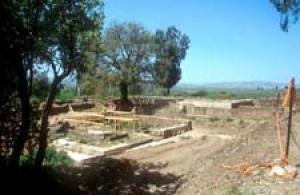
 Like most of us, much of my childhood was spent in school, and one of the worst words for any student to hear is “test.” For some of us, this word still conjures up feelings of fear, defeat and humiliation. As a student, I was never quite sure why we had to take so many tests. Years later, and much to my own surprise, I actually became a teacher and had a totally different view of the purpose of all those tests. They were not to make the children suffer as much as they were to show, student and teacher alike, what they already knew and what we needed to work on. The tests God put Israel through had a similar purpose. He allowed them to walk through some difficulties to show them what was in them and what work He still needed to do.
 Israel’s journey through the wilderness serves as a vivid illustration of the believers walk with God. Here we find that God led them away from some battles and into others. This reminds me of the words of Jesus in the Lord’s Prayer (Matthew 6:13),
 The children of Gilead, from the tribe of Manasseh, brought an interesting case to Moses. The father of one of the families had died without having any sons, as a result they were concerned with what would become of the family inheritance if the daughters married outside of their tribe. If the land became the property of the husband’s tribe, it would not be long before some tribal inheritance was lost. Moses sought the Lord and determined that an ordinance be put in place where the land would not pass from tribe to tribe. To ensure this, a woman without brothers would need to consider her inheritance and marry within her tribe.
 Israel stood on the brink of entering the promised land. For almost five hundred years the people had heard stories of the land of their fathers. They referred to it as the land of milk and honey, and longed to settle down and enjoy its fruits. Before entering in, Moses reminded them of how vast the land was; He spoke of its borders from the far northern hills to the southern dessert and from the Jordan to the Mediterranean Sea. The land represented the abundant life God desired for His people to walk in, but before they could enjoy any of it, they had to be willing to do battle. The land was given as a promise, but received through continuous warfare.
 God described the land He was giving Israel as a land that flowed with milk and honey. He was of course speaking figuratively of the blessed life that the children of Israel would experience within the land. This blessed life was conditional upon their obedience to Him, and their obedience included some driving out, and some demolition. They were instructed to tear down all of the images and the places where the false gods were worshipped. They were to leave nothing that would serve as a source of temptation. Moses went on to explain,
 Webster defines vengeance as, “the act of doing something to hurt someone because that person did something that hurt you or someone else.” Some synonymous would include payback, reprisal or even revenge. We seem to be fascinated with the concept of vengeance. It is the premise behind famous works of literature like; The Iliad, Hamlet and The Count of Monty Christo. It seems that the idea of paying back those who have wronged us resonates within the heart of man. This is probably due to the fact that all of us have felt wronged one time or another and wished that we were able to do something to get back at the ones who hurt us. There seems to be an innate cry in the heart of all men for what we perceive as justice. We have all heard children complain that things are not fair, and we see adults, young and old, rallying behind politicians who have stirred in them the desire to get what is theirs.
 Jim Gallagher