Ephesians 6:14-18
“Stand therefore, having girded your waist with truth, having put on the breastplate of righteousness, and having shod your feet with the preparation of the gospel of peace; above all, taking the shield of faith with which you will be able to quench all the fiery darts of the wicked one. And take the helmet of salvation, and the sword of the Spirit, which is the word of God; praying always with all prayer and supplication in the Spirit, being watchful to this end with all perseverance and supplication for all the saints”
 In Chapter 5, Paul compared our relationship with Jesus as a walk. Now he compares it to a battleground. We are told we have an enemy, the devil, who plans strategies against us. His goal is to get us to fall into sin, or to live so self-consumed, we have little or no positive effect upon others for the kingdom. As we watch him at work in the pages of God’s Word, we see his method is to use fear and discouragement, as well as to tempt us with the pleasures of the world. Here, Paul explains how we can be prepared for the daily battle we face. His description is of a soldier girded for war. Each element of his armor is designed to deal with a different attack.
The belt of truth refers to the Word of God. Having sound knowledge of Biblical doctrines will keep you from being misled by the subtle schemes of the enemy. Daily reading, and weekly Bible Study, will help prepare you for these attacks. The breastplate protects the heart from mortal wounds. Notice, our breastplate is the righteousness we receive when we trust in Christ for salvation. Daily failures can discourage the believer from moving forward. Those are the times when we look at the cross, remember our sins were paid in full, and His righteousness was given in exchange for simple trust. Since the Christian life is a journey, shoes are important, and we wear Gospel shoes. Everywhere we go, we should seek to take the light of the Gospel of the glory of Jesus with us. When we go on the offensive, we are less likely to be tripped up by the simple things.
Next, Paul mentions a weapon that is, in his own words, more important than all the rest. He states, “above all take the shield of faith.” Faith is critical to our journey and the battle. Faith has become a very mystical word, hard to define. It simply means to trust. If we are going to withstand the enemy’s attacks, we must put our confidence in the promises and warnings of God’s Word. Too often, we ignore the warnings of the Word, thinking somehow we are the exception to the rule. The shield of faith is activated when we choose to trust the Word of God over emotion, circumstances, and the voice of others.
As the breastplate protects the heart, the helmet was designed to protect the head. Head injuries can be mortal or can simply knock us out of the fight for a while. The mind is the battlefield where the enemy discharges his greatest attacks in the night hours, after an argument, before a decision, or in the midst of temptation. The mind becomes a battlefield where war is waged against us. The secret to victory is the helmet of salvation. When we remember what we have been saved from, what we have been saved to, and how God wants to use us in the salvation of others, our minds become filled with the very things which will help us withstand the attack.
Finally, Paul speaks of an offensive weapon. He tells us we have been equipped with a sword, but not just any sword. This is the Sword of the Spirit, defined as the Word of God. Since I have no military training, I am pleased to read that it is the Spirit’s sword. When we open our mouth and begin to share the promises of the Word with others, the Holy Spirit takes those words and uses them like a sword to impact the heart. How often have you heard the Word of God spoken and been convicted, encouraged, empowered or directed? The Holy Spirit will do the same through you, as He has done in you.
Gird up guys, it is time for battle!
Pastor Jim
 Isaiah 6 is perhaps most well known for what Isaiah saw. He records, in the year of King Uzziah’s death, he had a vision of the throne of God. He describes how he saw the Lord enthroned and surrounded by angelic beings, who ever live to give Him praise. What perhaps, is sometimes missed, is what Isaiah heard. He records hearing the voice of God in two distinct ways.
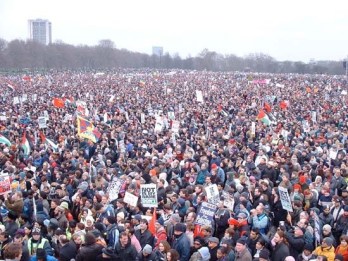 Sheol is an Old Testament word for the abode of the wicked in death. The New Testament uses the words “Hades,” “Tartarus,” and “Gehenna.” Although different words are employed, they all refer to the final resting place for those who reject Christ, and as a result die in their sins. Isaiah gives a sobering picture when he writes, “Sheol has enlarged itself…” Suggesting that the boundaries of hell are expanding because of the unwillingness of people to respond to the call of God and the cries of the prophet. There are a few things we need to keep in mind.
 The Christian life is like a journey. It begins when we put our trust in Christ for salvation, and ends as we cross the finish line entering into glory. In an age of high-speed travel, we often endure the journey for the sake of the destination. I have sat next to people on airplanes who were “white knuckling” the arm rests. I could tell they hate the idea of flying, but it was a necessity in order to reach their destination. The Christian life is not like that. The journey is as important as the destination. Walking, because it is such a slow means of travel, allowed for fellowship, life lessons, and teaching times to take place between Jesus and His disciples. He desires the same for us. As we go through life, we should see each day as a walk with the Lord. A walk in which we can commune with Him and learn from Him. Here in Ephesians Paul exhorts us on how to walk and what paths to take as we journey with Jesus toward glory.
 “The Branch of the Lord” is a messianic title, meaning it is a description of Jesus our Savior. This phrase is used often by the prophets to speak of the work of Christ.
 Isaiah is warning of coming judgment. The people had left the ways of God; perhaps thinking the Word of God was antiquated. Instead of being a nation that shone as a light to the world around them, Judah had become like all the other nations. Morally, spiritually and ethically, the people who were called by God to be a light, looked all too similar to the world around them. Isaiah points out one of the main contributors to their downfall,
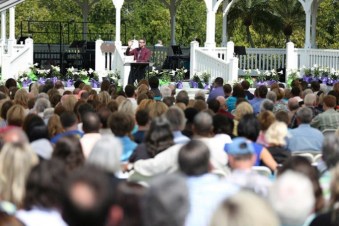 The Church was designed by God, purchased with the blood of Christ, birthed by the work of the Holy Spirit, and plays a very important role in the life of the growing Christian. It is no wonder the devil spends so much energy trying to keep us from church. Many have had their feelings hurt by the way they were treated at church. For some the church put expectations upon them, making them feel as though they were only valuable because of their talents or treasures. Others have felt neglected. They have gone to church for a period of time, and when things became difficult, they felt as though they were abandoned. All of us have had the weekly struggles that make it difficult to even attend. When Sunday morning comes along, the kids wake up sick, we get in an argument with our spouse, or we are simply worn out from a long work week. The list of oppositions to simply getting in the door of our church is longer than my fingers can type. I think it is critical to remember, the reason there is so much opposition to regular attendance is because of the valuable role the church plays in your life and Christian growth.
 Tragically, God is blamed for many of the atrocities committed by man. I say tragically, not because God cannot or will not defend Himself, but because as long as we blame God for what men do, we will fail to find a real solution to the problem. The chief wrong in this world is the heart of man. We see this demonstrated daily in the horrific actions reported on our TV screens. We hear of power hungry people oppressing others, in pursuit of their own ambitions. This happens everywhere on the globe. Sometimes, it is in a far away land where a political vacuum has allowed for the strongest force to take over, other times it happens locally where a person uses the tragedy in someone’s life for their own personal gain. Wherever and whenever it happens, it screams to us that the chief problem in our world is the heart of man.
 If it were possible to travel back to the time of Isaiah, I think we would be surprised by how religious the people were. At the temple in Jerusalem, sacrifices were being offered and the priests were busy about the work of the Lord. The hilltops throughout the land were laden with altars, and homes were filled with religious images. Prayer was perhaps at an all time high, and religious music filled the air waves. To an outside observer, it might seem that all was right in Israel. The problem was, although the people were passionately religious, they were not in a relationship with God. Isaiah wrote to explain the problem was with sin, and that religious activity is not the cure.
 Prayer is the great privilege of the Christian. With it, we are given access to the throne of God. Every care, no matter how small, can be cast at His feet. Every mountain, no matter how large, can be removed through prayer. Prayer was a daily activity in the life of Christ. He rose early for prayer; stayed up late into the night praying. He prayed before making decisions, facing obstacles or simply to give thanks to the Father for what He had provided.
