Matthew 25:13
“Watch therefore, for you know neither the day nor the hour in which the Son of Man is coming.”
 Chapter 25 seems to be about being ready. Jesus warns about a final day of reckoning, when the sheep will be separated from goats. To ensure that we are ready for what is coming, Jesus gives two parables. The first explains the need to be born again, the second the need to be busy about the Lord’s business.
In the first, five of the ten virgins were not prepared when the groom arrived. They may have been dressed, even excited, but they did not have oil in their lamps. Oil is used throughout Scripture as an illustration of the Holy Spirit. It seems, the main message is that these woman were not born again. It is also worth noting, that while saved, the other five were certainly neglecting their responsibilities. They slept while their friends remained ill prepared.
In the second story, we are introduced to three men, each of whom had been given varying sums of money to invest. The first two made investments, and were handsomely rewarded by the king. The third failed because of fear. It should be the desire of every Christian to use what we have been given to make investments in eternity.
Every promise given in Scripture will come to pass. One day, Jesus will fulfill His promise and return for His church. The question should not be ‘Is He coming?’ but rather ‘Are you ready?’ If you have not received Christ as Savior, do so right now. If Christ is your Savior, seek to use all He has given you to make investments in eternity.
Pastor Jim
Questions for chapter 25
- What did the virgins do that made them wise?
- According to verse 13, what application should we draw out of the story?
- What did the 3rd man do with the talents he was given?
- What did the first 2 do with theirs?
- How are you using your resources to further the Kingdom of Heaven?
- Who do the sheep represent?
- Who do the goats represent?
- How can we show the love of Jesus to strangers?
Old Testament:
Genesis 49- Blessed
Genesis 50- Meant For Good
 The Psalmist, in a time of great despair, wrote, “Why are you cast down oh my soul, and why are you in turmoil? Hope in God…” (Psalm 42:5). Hope serves as an anchor when the storms of life seem as though they are going to overwhelm us. As a child of God, we have the hope that His Word is eternal, and while circumstances may change, His promises remain trustworthy. We have the hope that in the midst of life’s hardships, He will never leave us, but will walk through the fires with us, even carrying us. Perhaps our greatest hope, is that Jesus has promised He will return for us. There is a time coming, perhaps in the very near future, when “as the lighting comes from the East and flashes to the west, so also will the coming of the Son of Man be.” This great hope was foremost in the minds of the disciples, as the events of Matthew 24 unfolded, and the chapter is Jesus’ answer to the question, “when.”
 Paul prayed for the Ephesian Christians that they would comprehend the love of God which he described as beyond our ability to understand.
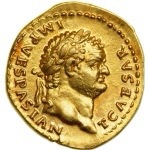 As the cross approaches, so does the opposition to Jesus. The religious leaders are desperately trying to turn the people against Jesus. In this case, they sent the young Pharisees, and the Herodians, a political sect that favored the Jews being ruled by Rome. When they arrived, they must have thought they had come up with the perfect question. No matter how Jesus answered, He would end up polarizing himself. “Is it lawful to pay taxes to Caesar?” If Jesus says “yes”, he will find himself at odds with the people. They will think of Him, and all He has done and said, as simply a political movement in support of Rome. If He says “no”, He will find himself the enemy of Rome and be a wanted man. I can almost feel the excitement of the religious leaders as the question is posed. Jesus’ response is as insightful as it is brilliant.
 Jesus told a story that the original audience understood to be speaking of how they were rejecting the Son of God. In response to the story, Jesus refers to builders who had rejected the “chief cornerstone.” In many ancient buildings, the foundation was supported by a cornerstone, without it, the foundation would not be able to support that which was built upon it. Jewish lore tells the story of the building of Solomon’s Temple, a project that took many years. The massive stones for the Temple were quarried some distance away from the Temple site and delivered to the builders. As they were laying the foundation, a very oddly shaped stone,that did not seem to fit, arrived. The contractor, thinking the quarry had made a mistake, had the stone thrown away. It was pushed down a hill into the city trash dump. Sometime later, the contractor sent to the quarry asking for the chief cornerstone. The quarry sent back a message saying it had already been delivered. When the contractor argued that he had never received the stone, someone reminded him of the oddly shaped stone, the one that did not seem to fit his plans, that he had thrown in the trash. Sure enough, that was the stone that would support the whole building. With great effort, they raised the stone out of the rubbish heap, and continued erecting what would become a building which would bring glory to God and salvation to man.
 This verse is the conclusion of a parable Jesus spoke regarding God’s reward system. All those who responded to the offer of the vineyard owner received the same wage, whether they worked for a few hours or for the entire day. What a beautiful picture of God’s grace. Heaven is the great reward of all who respond to the call of God. Young Timothy and the thief hanging next to Jesus were both recipients of God’s manifold grace, both will forever live under the banner of King Jesus, walk the streets of gold, and experience the glories of living in glory.
 We understand that marriage was designed by God. He created man and woman, and designed marriage as the most intimate of all relationships. But why? What is the purpose of marriage? If we were to walk the streets and interview people, asking them, “Why did you get married?”, I think the most common reply would be, “I got married to be happy.” I don’t think every married couple is happy, but I think that it is the motivation behind most marriages. We think being with that person will make us happy. But I want you to notice what we read regarding God’s design in marriage: “It is not good for man to be alone…” (Genesis 2:18). It was not for man’s happiness alone that God designed marriage, but instead, for his good.
 I think Peter had a little more insight into the mind of God than he gets credit for. In the passage leading up to this, Jesus spoke regarding confronting those who are in sin. He spoke of going to a sinning brother, bringing others and going a second time, then telling the church of his sin, and finally treating the unrepentant as you would an unbeliever (which of course means that you want to do all you can to win them back to Christ). It is in response to this that Peter asks regarding forgiveness.
 This verse has always fascinated me. Jesus is promising He is the one who will build the church. Since the church is not a building, but people, He is saying, He will add the living stones to the church of God. Jesus is also telling us, the devil and his forces seek to prevail against the church. The Bible gives us just enough insight into the realm of the spirit to know there are spiritual battles that take place. The battle is between the forces of God and the forces of Satan, and they are fighting over the souls of men. Jesus said He came to give us abundant life, while the devil is trying to steal, kill, and destroy us. The gates of hell will not prevail against the church. You can have great confidence this morning that the forces of Heaven are far superior to the forces of hell.
