Acts 2:4
“And they were all filled with the Holy Spirit…”
 The Holy Spirit is the driving force behind all the ministry that will take place in the book of Acts. Jesus had commanded His disciples to go into all the world and proclaim the Gospel message, but before they went, they were to wait for the outpouring of the Holy Spirit. Their personal lives, their ministries, and their world, would forever be changed because the Holy Spirit came upon them.
The outpouring of the Holy Spirit, on His church and the individual Christian, is a work of God. Jesus promised He would baptize them with the Holy Spirit. However, that does not mean the disciples played no part in the event. I think it is important that we understand their involvement, as the promise of God was being fulfilled in them.
First off, they were obedient to the Word. Jesus commanded them to wait in Jerusalem, and wait they did. Next, we find them in prayer. Jesus had promised that the Holy Spirit would be given to those who ask; but He also explained that we should ask persistently. Jesus told a story of a man who knocked on his neighbor’s door in the middle of the night seeking bread. He continues to knock until the man gave him what he was seeking. The man finally gave in because of the persistence of the petitioner (Luke 11:5-8). Jesus is not teaching us to bug our neighbors to get what we want. Instead, His point was to teach the need for persistent prayer for the Holy Spirit. Finally, they were in one accord. Rather than bickering about petty things, or focusing upon their differences, they were all together with a heart and mind fixed on their need for more of Jesus. It was in this setting, that the Holy Spirit was poured out upon His church. The lives of these men and women were forever transformed.
There is no special formula behind receiving the Spirit and gifts of God. I am not suggesting that we must travel to Jerusalem, fill a room with 120 people, and wait ten days if we want to receive the Spirit of God. I am saying, we are active participants in the work of God. If we desire a greater work of God in our lives, we must obey Him and seek Him.
Let’s take some time this morning to ask God to fill us again with His Spirit. Certainly, the world is in desperate need of men and women who have been transformed by the power of God.
Pastor Jim
Questions for Acts 2
- An exciting moment has taken place; the Holy Spirit has come on the Day of Pentecost. Verse 6 says “everyone heard them speak in his own language.” Verse 13 implies that some people thought they were drunk. Have you ever felt Gods Spirit move you to do something so amazing the world thought you were a bit intoxicated?
- In Peter’s first sermon, he quotes the prophet Joel 2:28-32. Remember there should always be a scriptural basis for what is happening in our lives by the Holy Spirit. What things do you see here?
- Peter also points out that the Crucifixion of Jesus was not an accident. His death was the plan of God. Read Psalm 16:8-11
- According to verse 33, where is Jesus now?
- The conviction of God moved on the people; what is Peter’s instruction?
- The instruction from God brought the most amazing gift from being obedient. How many were saved from this outpouring of the Holy Spirit?
- They continued “steadfastly in the apostles’ doctrine and fellowship, breaking of bread, and in prayers.” Which of these areas is the Lord speaking to you about?
Old Testament:
Deuteronomy 27- Choose
Deuteronomy 28- Head Or Tail
 The book of Acts is a sequel to the Gospel account, written by Luke. He declares, in this opening verse, the purpose for writing the Gospel account and the book of Acts. He states that the Gospel records what Jesus began to do; and the book of Acts, what He continues to do. Since Jesus is alive from the dead, the story of the Bible is a continuing one. John closed his Gospel account declaring that all the books in the world could not hold all that Jesus did for humanity. As amazing as it may seem, Jesus is not finished. The resurrection is not the end of the story. It is the transition point where the work of Jesus transfers from being accomplished outwardly through His life on earth, to the inward working of His Spirit in the life of all who believe.
 Much has happened since Peter first met Jesus. In a few short years, it seems as though a lifetime has transpired. Peter, the fisherman, has become Peter, the apostle. The young man who used to spend his days on the Sea of Galilee pursuing fish, is now a man who has spent over three years fishing for men. I imagine, at one time, his stories were all about his biggest catch, or perhaps times of weathering one of the storms for which the Sea of Galilee was famous. Now his stories would include tales of praying for the sick, casting out demons, and raising the dead. Certainly, life had changed for the young fisherman from Galilee. Along with change, came true spiritual development. The Peter who first met Jesus, was not the same Peter we see standing here. Sure, he still had his setbacks, but life with Jesus had changed him. Later, we read that even unbelievers recognized that spending time with Jesus changes men.
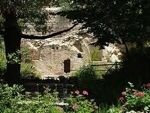 Mary saw Jesus, but the circumstance she was in, and the experiences she was facing, caused her to conclude that He was a gardener. It was not until she heard His Word, that she clearly understood who He really was.
 Jesus is facing the battle of His life. We could even say it was the battle for His life. All the political power of Israel was manipulating the power of Rome, to execute the Son of God. Yet Jesus remained silent. We know He wields the power to overcome these attacks. We read that He calmed the storms, healed the sick, cast out demons, and even raised the dead. Yet now, when it seemed to matter the most, He refused to lift a finger or say a word.
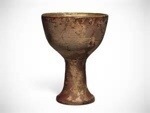 In the garden of Gethsemane, Jesus spent hours in prayer. The portion of the prayer recorded for us had to do with a cup. The event is recorded in Mark 14:35-36,
 Perhaps the best title for John 17 is, “The Lord’s Prayer.” As the hour of His betrayal, arrest, and crucifixion approaches, Jesus takes time to pray for His disciples. His prayer, while encompassing many things, seems to focus upon three thoughts.
 Much of what Jesus said was shocking to the ears of the disciples. He spoke with a wisdom that was otherworldly. They may have become used to the fact that Jesus was going to say things that surprised them, but I do not think anything could prepare them for the statement Jesus made here. Earlier, He had been speaking about His betrayal and death, He now declares they will be better off without Him. For over three years, these men have been with Jesus. They have watched as He transformed lives, and listened as He declared truths about the Kingdom of God. Now He is speaking about leaving, and declaring they will be more effective with Him out of the way. I know Peter is the one who is known for objecting to Jesus, but I find myself objecting on His behalf. I cannot think of a single scenario where it would not be better to have Jesus around. If I were fishing, boating, preaching, visiting the sick, feeding the hungry or facing the Pharisees, I think it would always be better to have Jesus there, than to be by myself. How could Jesus say such things? What conditions could make it better to have Jesus absent, rather than present?
 We live in troublesome times. Many face the fear of cancer or some other illness. The economy has shattered the comforts we once thought we had, or would enjoy. And after thousands of years of written history, the heart of man has not improved. We read of nations on the brink of war, violent crime haunting even the most peaceful communities, and global acts of terrorism on the rise. All this, and sadly much more, cause us to fear for our own safety, and for the future for our children and grandchildren.
 Jim Gallagher