Mark 3:5
“Stretch forth your hand.”
 When Jesus entered the Synagogue, it seemed everyone in the room knew He would address the man with the withered hand. His disciples were watching carefully. This event would be seared into their memories, and written down in the timeless Word of God. The Pharisees watched Him closely, knowing His compassion would lead Him to the man, even though it was the Sabbath. I imagine the man with the withered hand also watched eagerly, hoping Jesus would do for him, what he had done for so many others. As Jesus approached him, this man must have been excitedly anticipating what Jesus was about to do. It is here, where the story gets most interesting to me. Instead of touching the man’s hand, speaking words of healing, or even asking him to do a religious task, Jesus simply says, “Stretch forth your hand.” What sounds like a simple request to you and me was actually an impossibility. Jesus asked this man to do the one thing that he was not able to do. Had He asked him to run to the priests, to offer a sacrifice of 1000 sheep, or even travel to the pool of Bethsaida; difficult as those things might have been, they were possible. But to stretch out his withered hand, he could not do. Something happened within this man the moment he chose to obey Jesus. The impossible, not only became possible, it happened. His hand was restored.
Often, we feel like this man. Jesus highlights something in our life, and calls us to change. We look at Him as if to say, “Jesus, I can’t. I’ve tried so many times and this is too hard for me.” Christian, allow me to encourage you. The moment you decide you will obey, is the moment He provides the supernatural ability to bring about change. Together, let’s stop looking at all the reasons we cannot overcome our weaknesses, and let’s focus on His ability to transform our lives and stretch forth our withered hands.
Pastor Jim

 In the synagogue in Capernaum, Jesus encountered a man with an unclean spirit. While there is no way of knowing what lifestyle he had lived which led to his condition, we can surmise from other accounts of dealing with demons, he was living in great darkness and difficulty. Whatever turmoil he faced, the solution was encountering Jesus. What the world could not do, Jesus did with seven simple words,”be quiet and come out of him.”
 As Matthew 28 opens, we find a few women on their way to Jesus’ grave-site. Filled with despair, questioning how they will get to the body to show their respect, they are met by an angelic messenger with the greatest news they had ever heard. Jesus had risen! Oh, how their hearts must have leapt within, as we read “they went out quickly filled with fear and great joy.” The hope that seemed lost at Calvary, was restored in the garden. Along with the promise that Christ was alive, came the commission, “go quickly and tell His disciple…” When the disciples met the risen Christ, the commission was repeated to them, “go therefore and make disciples of all nations…” The greatest promise was coupled with the great commission.
 While I do not want to tackle the subject of the eternal destiny of Judas, I do see in him an illustration of how the Christian often deals with personal failure or sin. After the initial pleasure received from sin, we are filled with remorse or guilt. That guilt can become overwhelming and lead to discouragement, depression, and even despair. Too often, we follow the example of Judas, attempting to remove our guilt.
 Matthew 26 and 27 record the final events in the life of Jesus. The hostility toward Him has reached a climax, and His opponents are seeking to kill Him. Theirs is the most heinous of sins, the murder of the Son of God! But the text reveals that their sin was motivated by what commonly drives you and I to sin; the fear of man. The fear of man might simply be defined as being more concerned with what man thinks, than what God thinks. On the other hand, the fear of God is being more concerned with what God thinks, than what man thinks. Solomon wrote
 Chapter 25 seems to be about being ready. Jesus warns about a final day of reckoning, when the sheep will be separated from goats. To ensure that we are ready for what is coming, Jesus gives two parables. The first explains the need to be born again, the second the need to be busy about the Lord’s business.
 The Psalmist, in a time of great despair, wrote, “Why are you cast down oh my soul, and why are you in turmoil? Hope in God…” (Psalm 42:5). Hope serves as an anchor when the storms of life seem as though they are going to overwhelm us. As a child of God, we have the hope that His Word is eternal, and while circumstances may change, His promises remain trustworthy. We have the hope that in the midst of life’s hardships, He will never leave us, but will walk through the fires with us, even carrying us. Perhaps our greatest hope, is that Jesus has promised He will return for us. There is a time coming, perhaps in the very near future, when “as the lighting comes from the East and flashes to the west, so also will the coming of the Son of Man be.” This great hope was foremost in the minds of the disciples, as the events of Matthew 24 unfolded, and the chapter is Jesus’ answer to the question, “when.”
 Paul prayed for the Ephesian Christians that they would comprehend the love of God which he described as beyond our ability to understand.
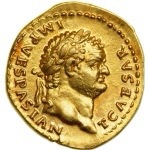 As the cross approaches, so does the opposition to Jesus. The religious leaders are desperately trying to turn the people against Jesus. In this case, they sent the young Pharisees, and the Herodians, a political sect that favored the Jews being ruled by Rome. When they arrived, they must have thought they had come up with the perfect question. No matter how Jesus answered, He would end up polarizing himself. “Is it lawful to pay taxes to Caesar?” If Jesus says “yes”, he will find himself at odds with the people. They will think of Him, and all He has done and said, as simply a political movement in support of Rome. If He says “no”, He will find himself the enemy of Rome and be a wanted man. I can almost feel the excitement of the religious leaders as the question is posed. Jesus’ response is as insightful as it is brilliant.
 Jim Gallagher