Genesis 10:10
“And the beginning of his kingdom was Babel…”
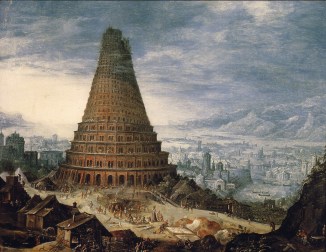 Genesis is the book of beginnings. In it, we are introduced to many things which play a prominent role as the rest of Scripture unfolds. Here, in Chapter 10, we are introduced to the city of Babylon, which becomes a major player in the Biblical narrative. It is mentioned 257 times in the Bible. We learn Babylon was built by a man named Nimrod (whose name means rebellion); he built Babylon in defiance of God. His purpose in building the city is recorded in Genesis 11:4
“Come, let us build ourselves a city, and a tower whose top is in the heavens; let us make a name for ourselves, lest we be scattered abroad over the face of the whole earth.”
Babylon is important because of its symbolic representation of man’s false religious systems. The focus of the city of Babylon was a tower to the heavens. It was not an attempt to build a stairway to heaven, but a tower that depicts man making his own way to God.
Today, the word Babel means nonsense, and the ancient Hebrew word, Babel, means confusion. However, the word Nimrod chose means gateway of God. What Nimrod called the way to God, Scripture calls confusion. They were confused because they based their system on works, thinking they were good enough, and if they tried hard enough, they would get to God. – God calls that confusion.
Fortunately, there is a gateway to God. It has been built, not on the achievements of men, but on the sacrificial work of Christ. Jesus said, I am the way (John 14:6) and I am the door (John 10:9), and on the cross He became for us the true gateway to God. Instead of trying to earn our way to heaven, we can simply receive it by placing faith in Christ.
Pastor Jim
 Matthew 5-7 contain one continuous message that Jesus preached to His followers on a hillside overlooking the Sea of Galilee. Although it is called a sea, it is actually a lake. The Greek word for sea and lake are the same word.
 Once the waters had resided and the ark settled, Noah and his family exited the ark to begin a new life. They would have to survey the land, build shelter, plant crops, and much more. It is interesting to me, of all the events that must have transpired, the Scriptures only focus upon a few. We read in Genesis 8, Noah offered sacrifice to the Lord. We can assume, after all he experienced, he was still a very godly man. We read in Chapter 9, a covenant between God and man was re-established, based upon the shedding of blood. When we come to the story before us, having settled in the new world with his new life, we find Noah indulging in wine and becoming fall-down drunk. As we continue through the Bible, we will see clearly that drunkenness is both foolish and forbidden. In our text, it is not the sin of Noah that is the focus of our attention, but the sin of his son, Ham.
 People seem to be fascinated with fighting. I can remember being in Jr. High School and hearing the word “FIGHT” resonate across the playground. All activities stopped and the whole student body ran in an attempt to get a front row seat to view the scene. Things have not changed; people gather to watch boxing matches, UFC events and even hockey games, all for the thrill of the fight.
 The last time Noah heard the voice of God he was instructed to enter the ark and shut the doors. Since that time, forty-seven days have passed. These were days of difficulty, unrest, fear and anxiety, as Noah and his family stepped out into the unknown. In a time when Noah needed the voice of God more than ever, it seemed that heaven had gone silent. What a blessing it is to read “God remembered Noah…”


 The story of the flood is a story of judgment and redemption. Mankind had turned its back on God. Moses is careful to describe the condition of the world at that time;
 As the drama of Genesis unfolds, we are introduced to two of Adam’s sons, and given a glimpse into their lives and occupations. Abel, the younger, was a shepherd, while his older brother Cain was a farmer. It was not their occupations, but their character that determined their destinies. We read, Abel brought an offering of the flocks, while Cain brought the fruit of the ground; God respected Abel’s offering and rejected Cain’s. The question we must answer is why? What was wrong with Cain’s offering?
 Jim Gallagher