Acts 2:4
“And they were all filled with the Holy Spirit…”
 The Holy Spirit is the driving force behind all the ministry that will take place in the book of Acts. Jesus had commanded His disciples to go into all the world and proclaim the Gospel message, but before they went, they were to wait for the outpouring of the Holy Spirit. Their personal lives, their ministries, and their world, would forever be changed because the Holy Spirit came upon them.
The outpouring of the Holy Spirit, on His church and the individual Christian, is a work of God. Jesus promised He would baptize them with the Holy Spirit. However, that does not mean the disciples played no part in the event. I think it is important that we understand their involvement, as the promise of God was being fulfilled in them.
First off, they were obedient to the Word. Jesus commanded them to wait in Jerusalem, and wait they did. Next, we find them in prayer. Jesus had promised that the Holy Spirit would be given to those who ask; but He also explained that we should ask persistently. Jesus told a story of a man who knocked on his neighbor’s door in the middle of the night seeking bread. He continues to knock until the man gave him what he was seeking. The man finally gave in because of the persistence of the petitioner (Luke 11:5-8). Jesus is not teaching us to bug our neighbors to get what we want. Instead, His point was to teach the need for persistent prayer for the Holy Spirit. Finally, they were in one accord. Rather than bickering about petty things, or focusing upon their differences, they were all together with a heart and mind fixed on their need for more of Jesus. It was in this setting, that the Holy Spirit was poured out upon His church. The lives of these men and women were forever transformed.
There is no special formula behind receiving the Spirit and gifts of God. I am not suggesting that we must travel to Jerusalem, fill a room with 120 people, and wait ten days if we want to receive the Spirit of God. I am saying, we are active participants in the work of God. If we desire a greater work of God in our lives, we must obey Him and seek Him.
Let’s take some time this morning to ask God to fill us again with His Spirit. Certainly, the world is in desperate need of men and women who have been transformed by the power of God.
Pastor Jim
 As Moses’ final hour quickly approaches, he pleads with the people to turn to the Lord. He has personally experienced the suffering that comes with rebellion against God. Forty years in Horeb, and forty years in the wilderness wanderings, have forever etched in his mind, the importance of trusting in, and following after, the Lord.
 Recently, I arrived at the church, only to discover that since I drove a different vehicle than usual, I did not have my key. First, I was frustrated at myself, then I looked for someone else to blame, and finally, called one of the other pastors to come open the office for me. When I got in, settled down, and began to unpack my bag, I discovered the key was in my bag all along. I had simply failed to take the time to look for it. Had I dug through the bag, I could have saved myself a lot of wasted time, energy and frustration.
  This verse makes me think of a high school performance where two students are selected to play the horse. One lucky young man gets to be the head, while the other is stuck behind him as the tail.
 The book of Acts is a sequel to the Gospel account, written by Luke. He declares, in this opening verse, the purpose for writing the Gospel account and the book of Acts. He states that the Gospel records what Jesus began to do; and the book of Acts, what He continues to do. Since Jesus is alive from the dead, the story of the Bible is a continuing one. John closed his Gospel account declaring that all the books in the world could not hold all that Jesus did for humanity. As amazing as it may seem, Jesus is not finished. The resurrection is not the end of the story. It is the transition point where the work of Jesus transfers from being accomplished outwardly through His life on earth, to the inward working of His Spirit in the life of all who believe.
 On the verge of entering the Land of Promise, Moses reminds the people they have a choice to make. Upon entering the land, they were to gather the entire nation in the valley between Mount Ebal and Mount Gerazim. On one mount, half of Israel‘s leaders were to read the blessings that would befall a people who obeyed the Word of God. The remainder of Israel’s leaders stood on the other mount to declare the curses that would befall them if they ignored, or rebelled against the Word. In addition to the spoken Word, they were to write the Word on large, whitewashed stones that were easy for all to read. Beyond question, the key to Israel’s success and happiness was their obedience to the Word.
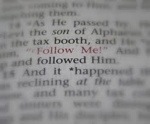 Much has happened since Peter first met Jesus. In a few short years, it seems as though a lifetime has transpired. Peter, the fisherman, has become Peter, the apostle. The young man who used to spend his days on the Sea of Galilee pursuing fish, is now a man who has spent over three years fishing for men. I imagine, at one time, his stories were all about his biggest catch, or perhaps times of weathering one of the storms for which the Sea of Galilee was famous.
 The story of Abraham is the story of God, that has been rewritten in the lives of countless thousands over the years. Abraham was an unknown shepherd living in ancient Babylon when he heard the call of God. He was to separate from the world he lived in, and commit himself to following the Lord. As he, daily, walked by faith, and took simple steps of obedience to God, his
  A man, condemned of certain crimes, was to be beaten as a form of punishment and humiliation. The beating was reserved for the wicked, while the righteous were exonerated. Years later, a “Kangaroo Court” met in Israel, gathered false witnesses, and condemned the Son of God to death, for the high crime of blaspheme. He was taken to the Roman authorities, where He was again tried, convicted and condemned. Part of the sentence meted out to Him was the Roman scourging. Unlike the Jewish law that carried with it a level of mercy, the Roman scourge was designed, not only to punish, but to kill.
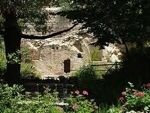 Mary saw Jesus, but the circumstance she was in, and the experiences she was facing, caused her to conclude that He was a gardener. It was not until she heard His Word, that she clearly understood who He really was.
 Jim Gallagher